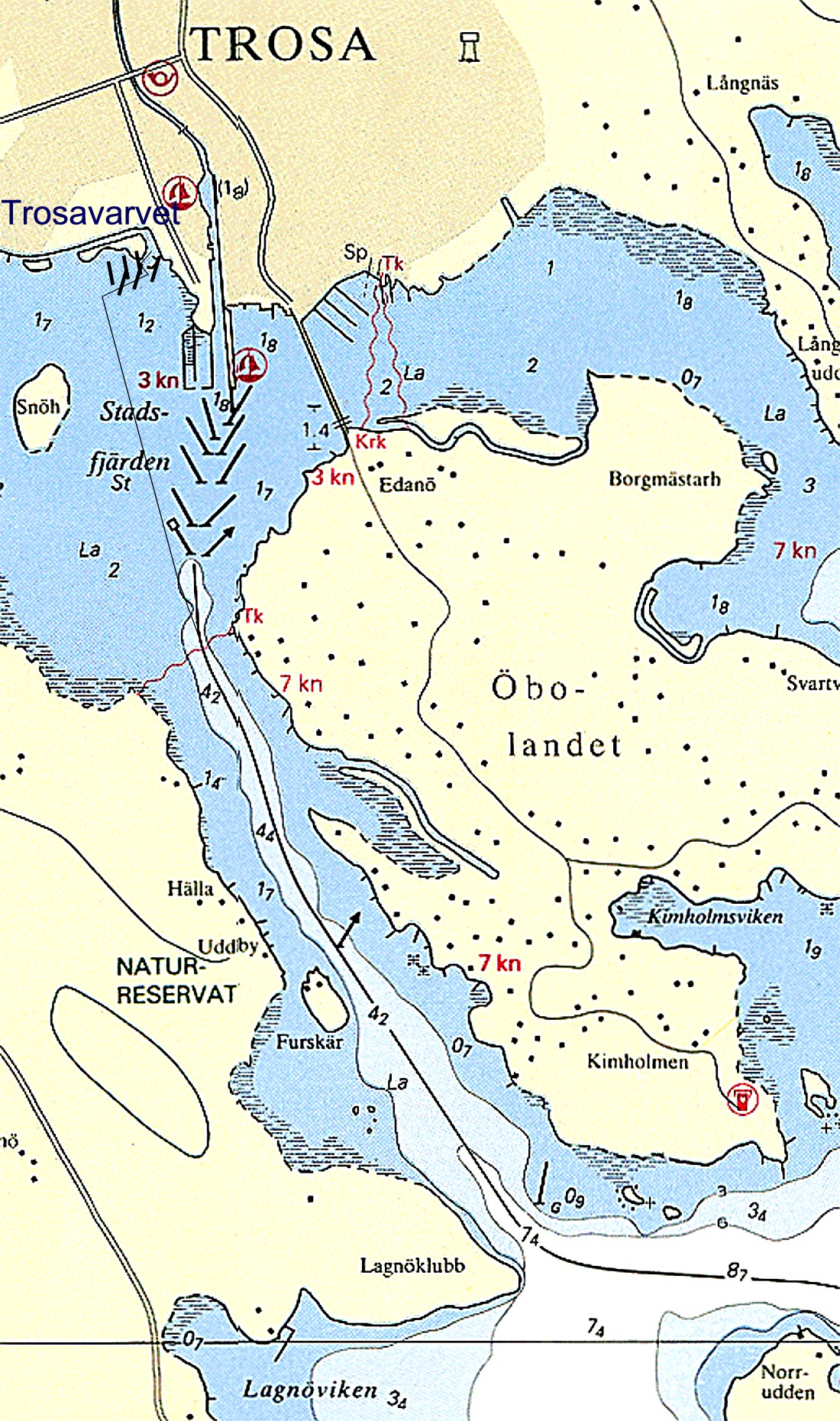
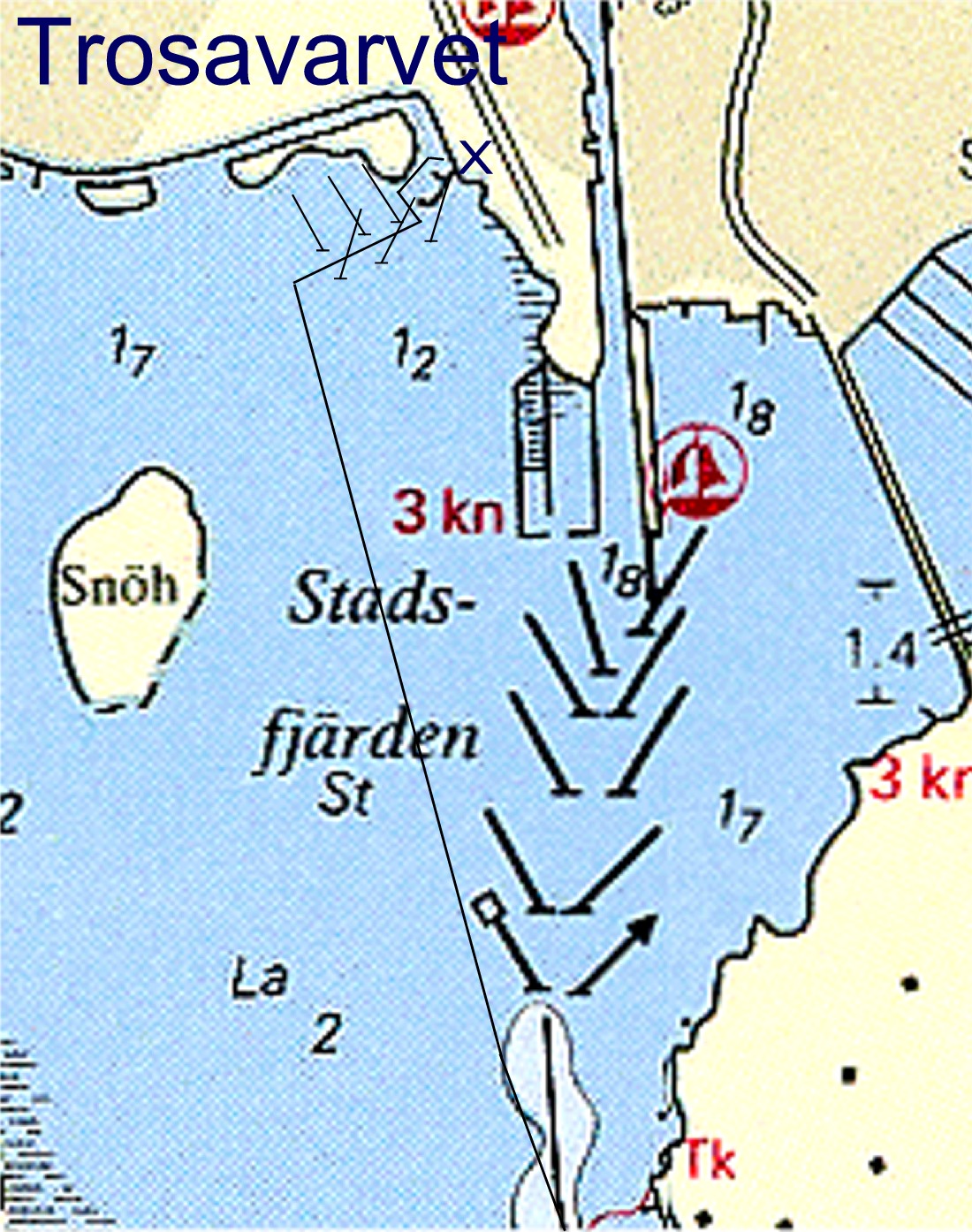
Bookmarks on this page: The Ad / Nordica/Halman vs Havsfidra / Boat Data / The Name Fidra / The Sign Φ / The Name Curette / Osmosis / Lisa Ekdahl / Links / Evgeny GvozdevDescription of Curette / Launch 2006 / First Trip 2006 / Julafton Lighthouse / Joshua Slocum and news from Fairhaven October 2008  / New Day in August  / Last Day in August / Tenth of September /  Trosa Wharf / Trosa Sea RescueWorld Hovercraft Championship / Saturday 16Last In Last Up
 Leave this page for the front page at holmers.com

Havsfidra

Skip this introduction page and go directly to:
Summer 2007
.
Summer 2008.
(Scheduled to start in the middle of June,
but since the weather gods has shown their mercy,
we'll launch today, on May 30!)
Summer 2009. Shall we prepare ourselves for a new warm pleasant summer?
Summer 2010. Has begun with a very unpleasant discovery!


This is a page about a Swedish boat model from the sixties that got a lot of attention when sailing across the Atlantic Ocean and in the Arctic Sea.
I have just for fun written it, in Swedish only, because I couldn't dream of the interest and of how many that actually search on the Internet for Fidra and Havsfidra.
 It's Amazing that a small boat built in an amount of just 388, during ten years, the last one more than thirty years ago, still make people interested.

To those of you, a couple of dozens Fidra owners on other continents looking for spare parts for your boats I can only say: We don't have any either! We have to make them our selves! Maybe that's a part of the charm too!
The Fisksätra Wharfs, both in Nacka outside Stockholm and in Västervik or Gränna are nowadays marinas only, or industrial enterprises. They dont' have anything to do with Fisksätra boats, more than perhaps providing moorings for them :-)


My intention is to translate most of this page to English.
Thereafter I will continue correcting it. :-)


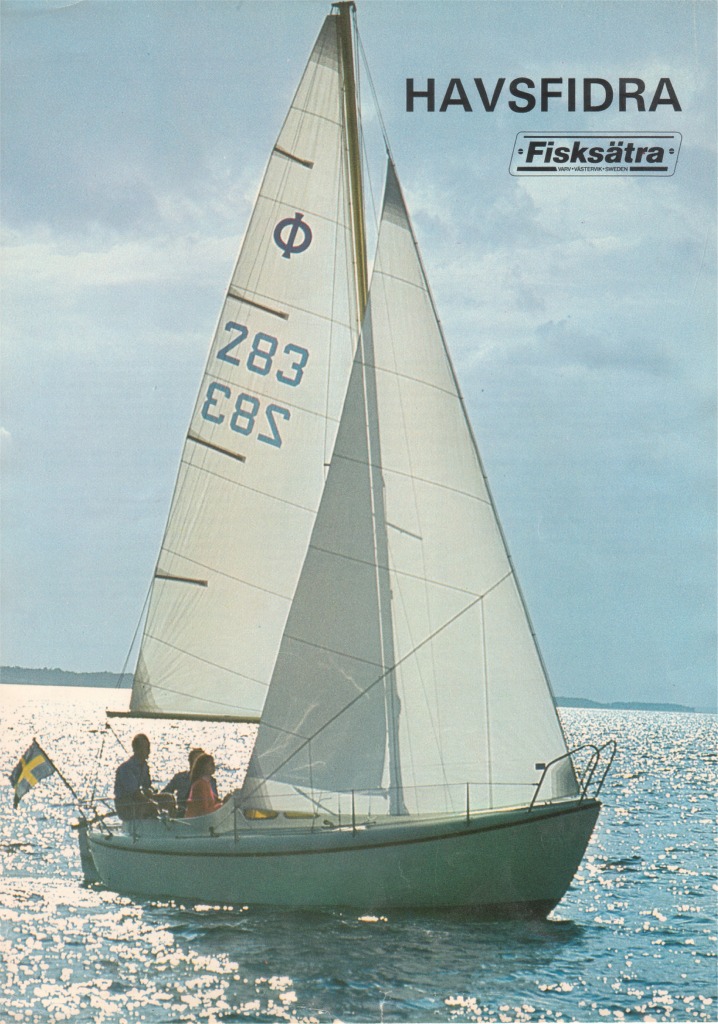
Havsfidra 1.jpg (2390738 byte)
Omslagsbilden till den första broschyren.
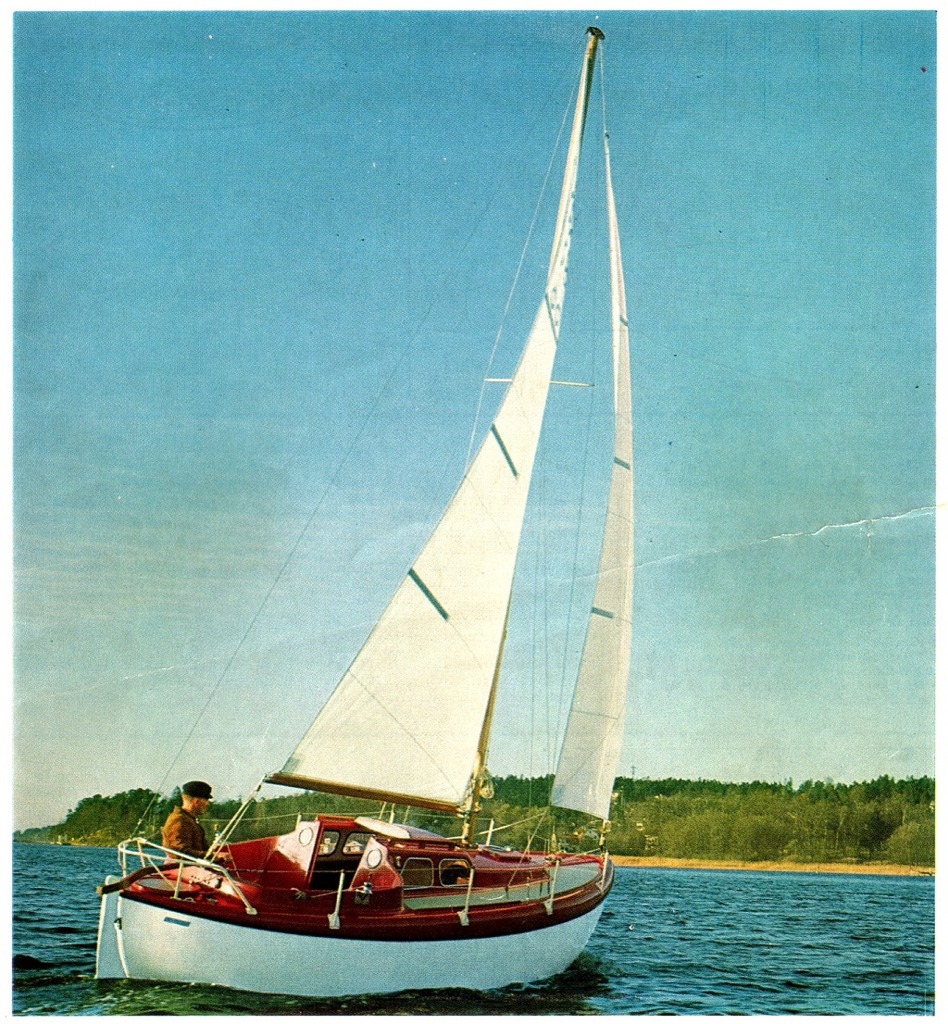
The first leaflet. Ain't she cute?

If you have an original engine of the make Albin, Volvo, Göta or Vire, it's no problem.
You can even get a brand new Albin, they have started up the production again of the make that built their first marine engine in 1906!

Albin Motor homepage, in both Swedish and English.
Pictures, instruction- and spare part books in Swedish and English (pdf) for download, free of charge!
Even for Volvo engines, as the first ones actually originates from Albin Larsson!

The Motorfabriken Göta together with Solo engines. Has been making engines since 1907, and still do!
In Swedish only, but beautiful pictures!

Volvo Penta. Download page.

Vire Marine Engines. The Finnish engine. Unofficial website made by a dedicated Dubliner. Comprehensive!  Lots of tips and links to international dealers. Also for alternative parts! 


Jag tror det var på våren 1968 mitt intresse för Havsfidran vaknade. När Båtnytt berättade att pansarlöjtnant Bertil Enbom skulle delta i enmanskappseglingen över Atlanten samma år, med en 6-meters Havsfidra!

När Bertil Enbom efter 60 dygns segling, eller var det 40, med sömn i tjugominutersperioder under hela resan, strax efter midnatt, seglade in till kaj i Newport, Rhode Island (vågade inte starta motorn pga bensinläckage) tror jag inte han själv förstod att han efter handikappreglerna faktiskt seglade in som tvåa i hela tävlingen!


To me it all began in the spring of 1968!

A Swedish boating magazine Båtnytt made a sensational announcement, that First Lieutenant Bertil Enbom of  the Royal Göta Armored Life Guards P1 in Enköping, eeh? Or, was it P4 in Skövde, yes, I think it was the Skaraborg Regiment! However, both regiments are located and their business are as far from sailing and any ocean you can get in Sweden, and he were going to participate in the Single-Handed Transatlantic Race in a 20-foot Havsfidra!
And he partisipated for sure!
When Bertil Enbom after 60 days, or was it 40, with sleep in 20-minute periods during the whole journey, shortly after midnight sailed all the way in to the dock in Newport, Rhode Island ( he didn't dare to start the engine due to gasoline leakage) I don't think he fully understood that according to the handicap rules he arrived only second to the winner of the entire race!

_,

Havsfidra is a compound of the words Hav (Sea) and Fidra. When connecting two words in Swedish you almost always put the letter "s" in between.
One exception is the Swedish Socker Association (Svenska Fotbollförbundet). but, that's just because they didn't learn their grammar at school !  They played ball and had fun instead! ;-)

Another exception is the Jägershillgatan in Malmö, which consists of three words Jäger, hill and gatan (Hunter, hill, street) and yet it has only one "s" in between.

On the other hand, the word Ändbusshållplats (End, bus, hold, place) (yes, we talk like that) has not got a single "s". more than the two in buss. Don't ask me why!

We have shortenings too:

Det är bara att åka = Hä bare åk = (It's only to go). Quote: Ingemar Stenmark.

Bara för att = Bafatt = (Just because). Quote: Björn Borg.

Hej! Hur mår Du? = Tja! Huere? = (Hi, How are you doing?). Quote: Myself.


Fisksätra is also a compound  of two words, Fisk (fish) and Sätra (Sätra or Säter is an ancient word for the place where the livestock graze). Sätra also automatically contributes with that famous letter "s" in between that the previous mentioned socker players forgot.
Located in the municipality of Nacka, where by the way perhaps one of our most famous football players Nacka Skoglund got his name... Nah, sorry, which has grown during the 1970s to a modern suburb to the capital Stockholm.
The architects had probably a vision of keeping the traditions or memories from the past alive by naming different areas like "Boat Hill" and "Fishing Height", and street names after fish and boat details. "Pike Street" and "Rigging Road" for instance. I'm not sure how "Dragon Path" fits into the story, but it is there, of some reason!
Do I need to tell you there is a "Fidra Road" too?
I have been visiting the Fisksätra wharf a couple of times during its heydays, but I must admit that I don't remember the building or even which part of the harbor area  the wharf was situated. It may very well be the entire harbor area! :-)
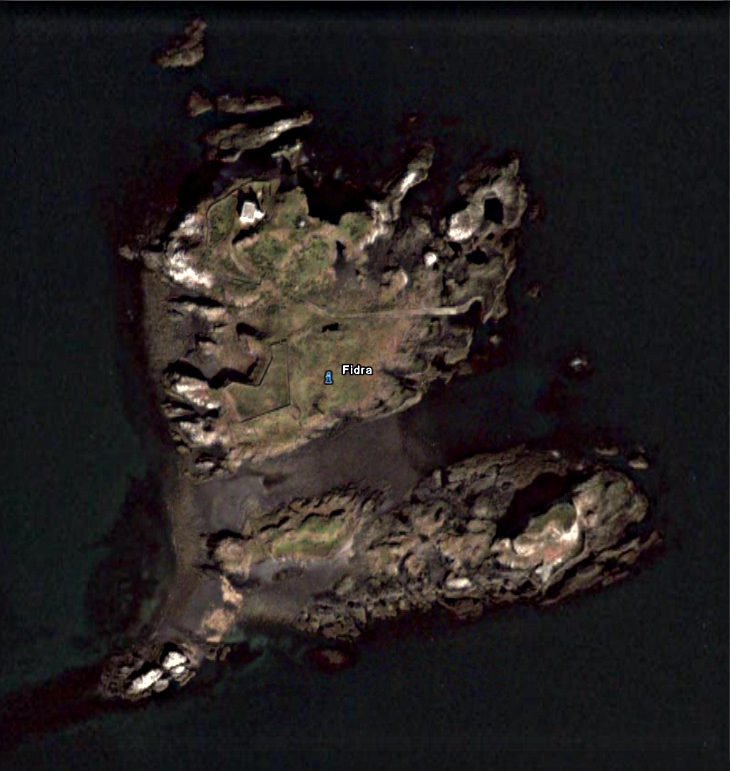
But here is a placemark for Google Earth users.
And another one for Google Maps.
A view through Hitta.se
.
Why not try this brand "new" (November 2007) view called "Utsikt" at Eniro? A 45 degree aerial picture of what I believe is the main building of The former Fisksätra Wharf.


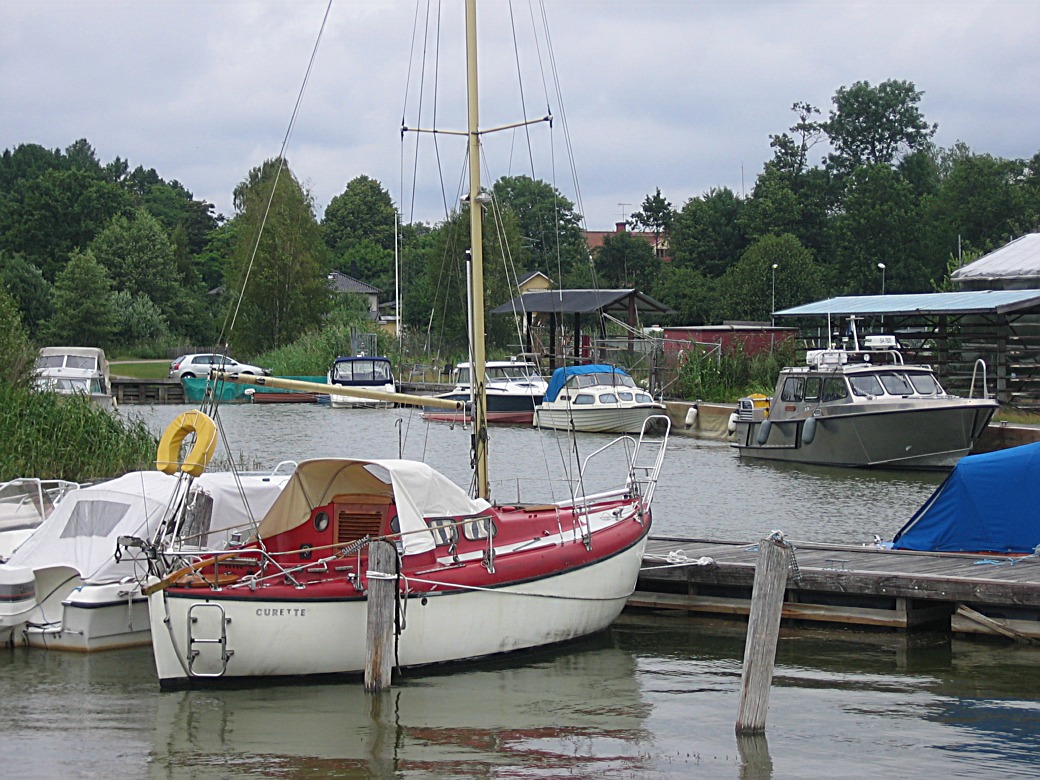
Det blev femton års seglande med andra båtar innan jag själv blev ägare till Havsfidran Curette.


It took me another fifteen years before I found the Havsfidra Curette almost by accident.


Så här löd första reklambroschyren jag fick tag i. Jag har den kvar fortfarande.

The following part is from the first leaflet I laid my hands on, I do still have it! :-)
I will not tire you by translating it because you have heard it all before, many times.
It begins with the company history as the first producer of fibre glass boats in Sweden and for the Swedish Royal Navy,
then it addresses you as the most skilful and discerning seaman, and finally raises the Havsfidra to the heavenly skies.
Necessary words in an ad, but nothing new under the sun!


Havsfidra 20

Havsfidra 3.jpg (1081684 byte)    Havsfidra 4.jpg (11267977 byte)
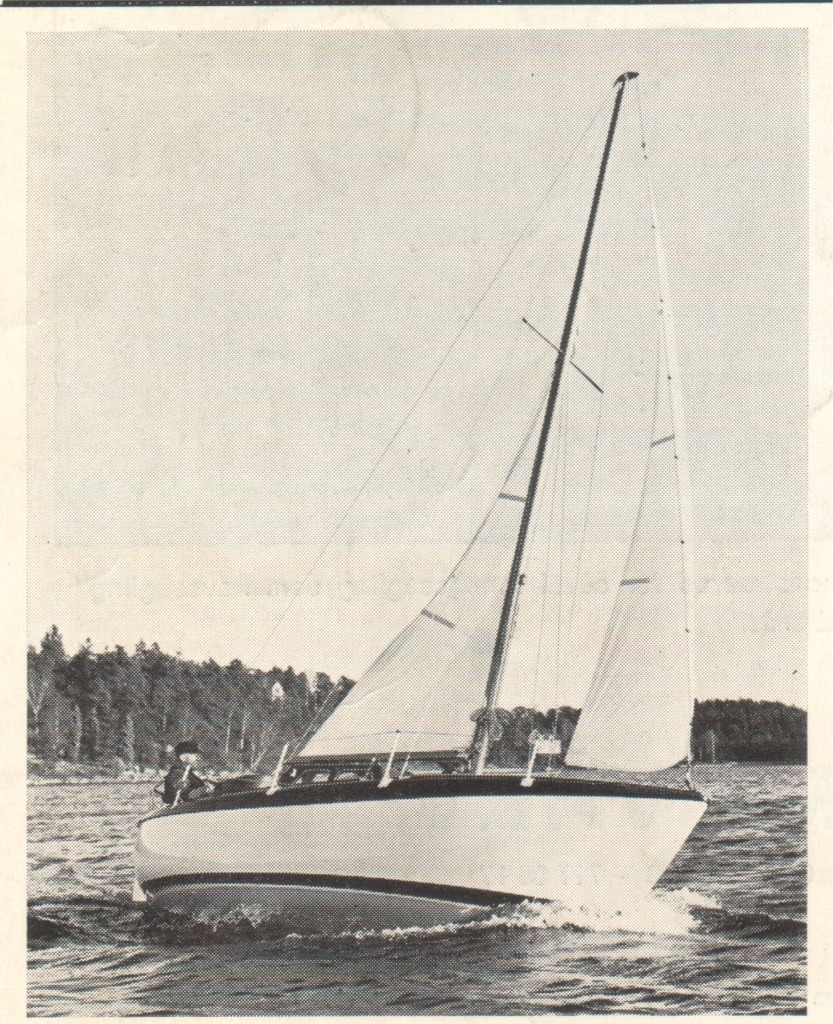
Leaflets from around 1968 and 1973.


Modern Midgethavskryssare

 i glasfiberarmerad plast

Redan 1949 byggde Fisksätra Varv sin första glasfiberbåt och vår långa erfarenhet är alltså en garanti för att Ni får en båt av allra högsta klass. Under årens lopp har vi byggt tusentals trä och plastbåtar i storlekar från jollar till 300 tons minsvepare. En stor del av vår produktion har gått till statliga myndigheter — marinen, armén, tullverket, sjöfartsstyrelsen. Glasfiberarmerad plast anser vi stå i absolut särklass både när det gäller utformning, hållfasthet och låga underhållskostnader. Vi bygger upp laminatet i samtliga våra båtar enligt Svenska marinens normer, vilket betyder handupplagt speciallaminat med en hållfasthet som uppfyller de absolut strängaste krav.


Vackra att se på ...


De är ännu bättre inombords, men det är inte hela sanningen om en Fisksätrabåt. Vi tror, att Ni kommer att hålla med om att Fisksätra erbjuder Er några av de bästa båtarna i Europa — eller hela världen för den delen. Orsaken är att de konstruerats och byggts av kvalificerat varvsfolk för den kategori erfaret och verkligt kunnigt sjöfolk Ni tillhör eller kommer att tillhöra.


-------------------------------


--------------------------------


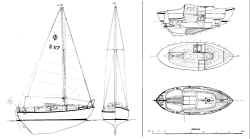
Havsfidra modern segelkoster med valdäck, ruff, doghouse och självlänsande sittbrunn. Båten är avsedd för familjesegling i skärgården och till havs. Havsfidra är tillverkad av glasfiberarmerad plast enligt Svenska Marinens normer och är sålunda mycket kraftigt dimensionerad ur styrkesynpunkt samt är konstruerad med erfarenhet från våra tidigare lyckade båttyper. En Fidra visade sina förnämliga egenskaper i 1966 års hårdaste havskappsegling "Skaw Race" genom att placera sig som 2:a och bästa svenska båt i klass V. "Skaw Race" var tävlingen där över 100 av 157 startande bröt. Fidrans styrka och kvalité förenad med goda segelegenskaper gav ett utmärkt resultat. 


Ännu ett påtagligt bevis på Havsfidrans sjöduglighet och kvalité är Löjtnant Enboms och Åke Mattsons fantastiska prestationer med Fione respektive Goodwin II i 1968 års enmanskappsegling över Atlanten (Single Handed Transatlantic Race), där bl. a. Fione kom på 2:a plats enligt handicapregeln. Goodwin ll's •färd efter Amerika och Canadas ostkust över till Grönland är också en prestation som gett eko i pressen.
Havsfidran är utan tvekan en av de mest säkra båtar som finnes i sin storleksklass.


-----------------------------


-----------------------------


-----------------------------


Nordica/Halman vs Havsfidra

Nordica Boats Website


A comparison of the
Nordica and Havsfidra


There have been suggestions on the web that the Nordica and Halman boats in North America, named Midget and Baltic in Europe, are related to the Havsfidra in Sweden, through the Danish Lynæs wharf and the Swedish Fisksätra wharf. This is most certainly not the case!

The Lynæs wharf have had a strong tradition of designing and building both sailing fishing boats as well as pleasure boats since 1886!

The Fisksätra wharf was established I believe right after World War I, and under the leadership of F Axel Larsson the wharf were only building motorboats and often constructions by the country's at the time most famous boat designer C G Pettersson.

After 1936 when Axel’s son Torild graduated as boat designer they got more orders from the Swedish Navy and Coastguard. The interest from the Swedish navy and Coastguard in fibreglass boats encouraged the wharf to in the late 1940:s become the pioneer in Sweden in this new building technique, which resulted in mine sweepers, sea measuring and patrol boats where an amount of them were still in use as late as in the mid 1990:s. The first pleasure boat in GRP was The Swallow in 1954. 

The first version of Fidra in 1955 was open and ring-decked called Fishing Fidra. Later on the Motor Fidra, Sport Fidra, Cabin Fidra and finally in 1963 Havsfidra (Sea Fidra) was developed.


I believe neither designer Malta Müller nor Lage Eklund looked so much at each other’s constructions, but more in other directions. Look at the deck design,  isn’t the doghouse a typical contemporary Sparkman & Stevens design? ;-)


The Nordica has a traditional hull shape with freeboards leaning outwards making it very stiff in the end. The deck line has also a very beautiful curve, perhaps related to old Danish and Dutch North Sea going vessels.


The Havsfidra was chiefly designed for efficient GRP production and ease for a fisherman leaning towards the freeboard. That’s why the freeboards are not leaning outwards making the boat more narrow than a traditional Swedish “Koster” (Swedish west coast double ender). This means that the Fidra will when struck by a willy-willy with full sails hoisted not accelerate fast enough but tilt instead with the result of water in the cockpit and the crew hanging with both hands in the handrail unable to do anything until its’ over! She is both initial weak and end weak and will therefore need correct sail setting to perform well.


-----------------------------


-----------------------------


Seamanship


Of coarse a small boat has to be well built to perform in the open sea, but it’s equally important who is sailing. The reason to the second place for the Havsfidra Fione in the Single Handed Trans Atlantic Race in 1968 was not only thanks to the boat, but more the skipper Bertil Enbom. He made the journey in 40 days. The same time as Sir Francis Chichester used with the 55 feet? Gipsy Moth a few years earlier.


Åke Mattsson in Goodwin II was disqualified because he accepted to receive a can of drinking water during the same race, but later on he sailed downeast (towards northeast) along the American coast and over to Greenland when heading home. A couple of years later he sailed in a borrowed Maxi 77 across The North Sea to Scotland or Shetland Islands, in November, this without any preparations to speak of.


-----------------------------


-----------------------------


Qualifications


I remember reading about the American and his spouse that crossed the Atlantic Ocean in a surplus amphibious Jeep right after the war. 


He learned how to navigate by trial and error during the journey.
It’s not about the vessels, it’s all about the men and women that sails them!


-----------------------------


-----------------------------


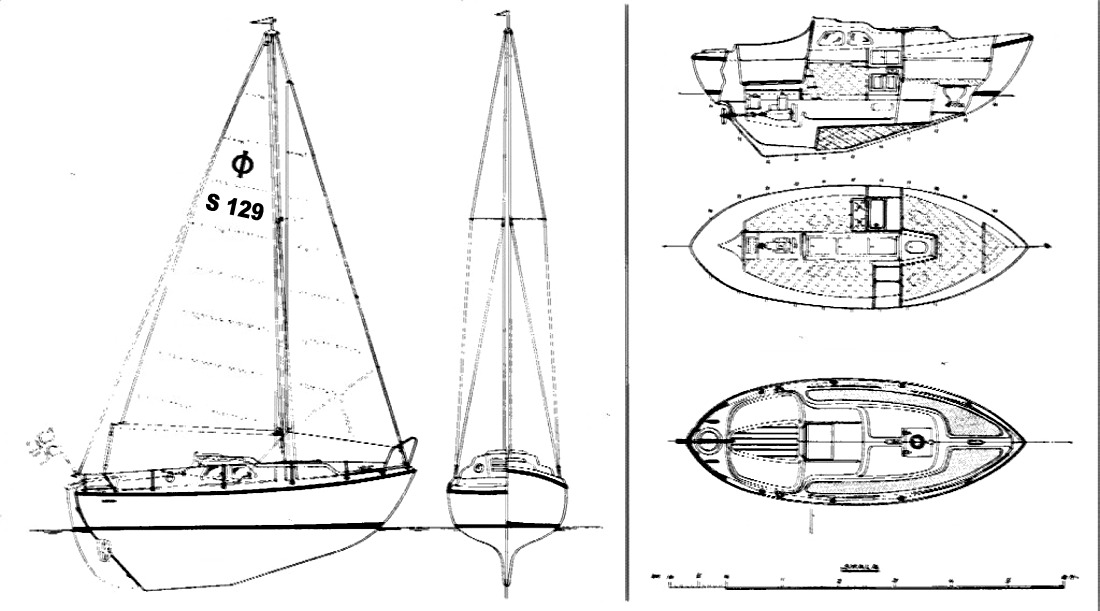
Data


Längd överallt 6.00m
Längd i vattenlinjen 5,00m
Bredd största 2,20 m
Bredd i vattenlinjen 1,80 m
Djupg. Största 1,10 m
Minsta fribord 0,62m
Stävhöjd för 1,10 m
Stävhöjd akter 0,70 m
Totalvikt 1400 kg
Kölvikt 550 kg
Motorstorlek 10 hk
Sovplatser 4 st
Kajutahöjd invändigt 1,65 m


Havsfidra 5.jpg (726610 byte)


Segelyta storsegel 10,0 m2
Segelyta fock 6,7 m2
Segelyta stormfock 5,0 m2
Segelyta genua 10,25 m2
Segelyta spinnacker 30,0 m2

Laminattjocklek: 
Skrovsidor ca 6 mm
Botten ca 8 mm
Däck ca 6 mm
Köl och stävar ca 12 mm

Färger:
Skrov vit eller marinblå
Överbyggnad oxblodsröd eller pärlgrå


-----------------------------


-----------------------------


-----------------------------


What is Fidra?

Namnet Fidra.

Var kommer det ifrån?


The name Fidra?

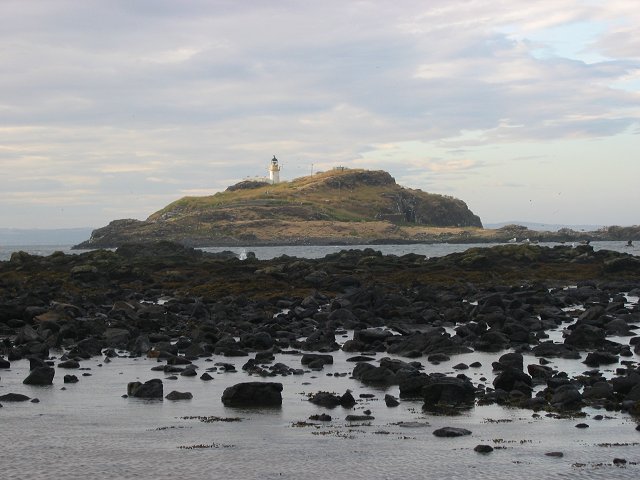
Fidra is a small uninhabited island located close to land on the southern shore in the mouth of Firth of Forth outside Edinburgh in Scotland.
Apart from have given its name to our boat, Robert Louis Stevenson is supposed to have used the shape of the island when creating The Treasure Island. It's not so strange if you know that his father and uncle actually built the 17-meter tall lighthouse on the northern part of the island!
The lighthouse was inaugurated in 1885 and automated in 1970. The last lighthousekeeper left in 1971.
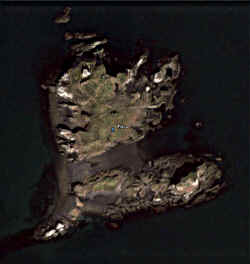
Fidra.jpg (311428 byte)

Fidra fyr är placerad på norra delen av ön som idag även är fågelskyddsområde och för övrigt helt obebodd.

Link to Fidra for Google Earth

Link to Fidra for Google Maps

Fidra är en liten obebodd ö som ligger utanför Skottlands östkust, 800 meter från södra stranden i mynningen av viken Firth of Forth in mot Edinburgh, 4 km väster om samhället North Berwick. Förutom att ha givit namn åt vår båt tros Robert Louis Stevenson ha använt kartbilden av Fidra som underlag till boken Skattkammarön. Kanske inte så konstigt om man vet att hans pappa och farbror byggde den 17 meter höga fyren som invigdes 1885 och till sist automatiserades 1970, och siste fyrvaktaren flyttade ifrån ön 1971.

Ön Fidras namn har i sin tur troligtvis sitt ursprung i fornnordiskans "fiaðr" fjäder, och förmodligen syftande på överflödet av fågelfjädrar på ön.


The island Fidra has in its turn probably got its name from the old norse word "fiaðr", meaning feather. Not a strange choice when seeing the abundance of bird feathers on the island of today that has become a bird sanctuary together with Bass Rock, which is considered one of the Twelve Wildlife Wonders of the World.
Do enjoy the views through the six live birdcams from the North Berwick Sea Bird Centre:
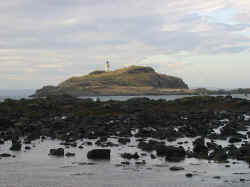
Fidra35185.jpg (59928 byte)
Fidra

Bilden ovan är hämtad från Wikipedia och copyright innehas av Richard Webb. 

Häng med ut till Fidra genom denna webbkamera med flera olika vyer.


Fidra was also the name of the first Swedish circumnavigating yacht in 1920-22.
Cariad was her first name, and she has got it back again and is taken care of in Japan today!
View her own website here!
I'm not quite sure any more...
View this page!
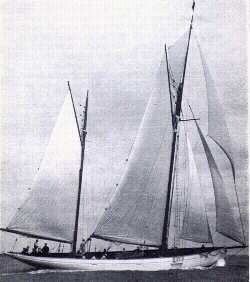
fidra.jpg (96526 bytes)

Fidra var även namnet på den första svenska jakten som seglade jorden runt 1920-22.

The Swedish Royal Navy leased M/S Fidra during WW2 as an "Assisting Cruiser"!?

fidra_1939_2[1].jpg (76867 byte)
Vykort från Lennart Falleth samling.

Fakta om Fartyg.se

Svenska flottan hyrde in lastmotorfartyget M/S Fidra under beteckningen hjälpkryssaren 10 under andra världskriget. Återlämnad till sin ägare Stockholms Rederi AB Svea efter kriget och har efter flera ägarbyten hamnat i Libanon under sjuttiotalet.


-----------------------------


-----------------------------


-----------------------------


The sign Φ

Fi or FI has several meanings:


Tecknet Φ

Fi eller FI har flera betydelser:


Let's skip it!

We know what it above all stands for!


Φ, φ, fi eller phi, den tjugoförsta bokstaven i det grekiska alfabetet. 

Fi är en militär förkortning för "fiende", vid svenska militärövningar vanligtvis av hypotetisk natur. Begreppet används i den klassiska frasen den lede fi, "den onda fienden". 
Fi är en vetenskaplig förkortning för ämnet filosofi. 
Fi är en förkortning för Feministiskt initiativ. 
Fi är en förkortning för Finansinspektionen 
Fi är IATA-koden för Icelandair 
Fi är landskoden (ISO 3166-1 alpha-2) för Finland 
fi är språkkoden (ISO 639-1) för Finland 


Φ eller φ används också som beteckning på en rad olika saker:

φ, inom geodesi avstånd från ekvatorn. Anges i N/S 0-90˚, se även meridian.

Inom matematisk analys en obekant eller godtycklig vinkel i allmänhet, och framför allt inom vågrörelseläran beteckning för fasförskjutning. 

Φ, inom statistik beteckning för bias. 
φ, beteckning för konstanten gyllene snittet. 
φ betecknar också en premiss i argumentationsanalys.


Nä, Fi fan för alla oväsentliga bortförklaringar.

Vi vet ju alla vad det framför allt annat står för!

Fidra!


-----------------------------


-----------------------------


-----------------------------


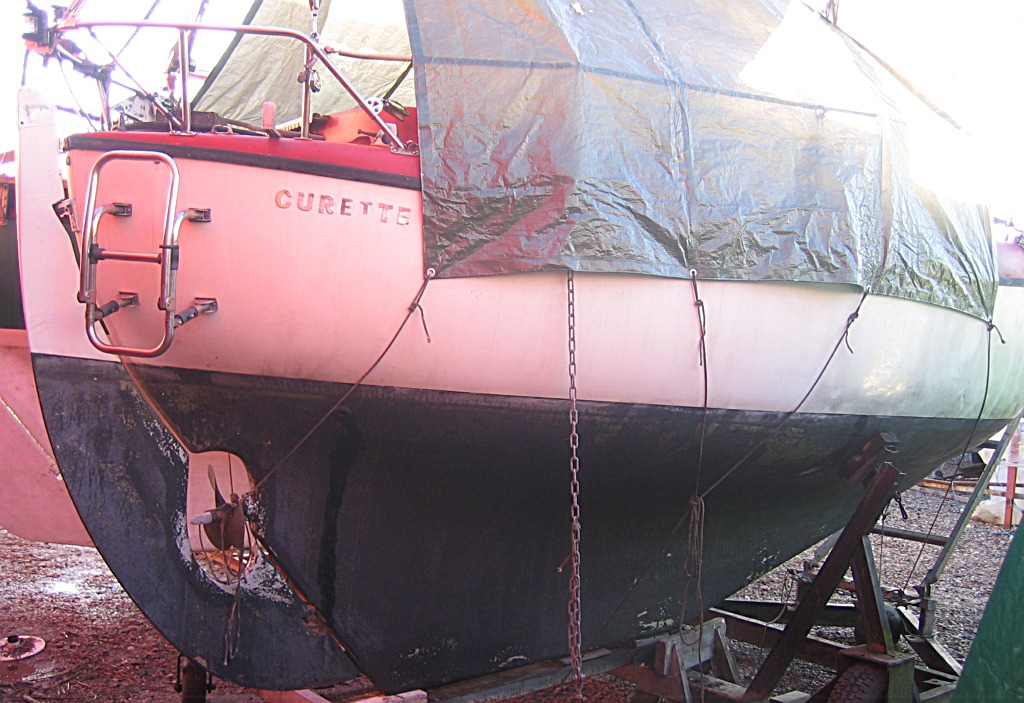
Curette is originally a surgical instrument, with an oval shape, almost like a spoon. It's used for scraping tissue samples. Later models developed for grooming of nails and ears.
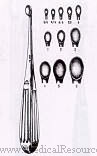


I have recently found out that Curette also is a village, north of the Loire Valley in France. Ten miles northnorthwest of Nantes.

The Donkey driven carts in Cairo and other cities in Egypt are sometimes refferred to as a Curette. I Guess it's the spoon shape again!


Och namnet Curette?

Ursprungligen ett kirurgiskt verktyg. Ovalt, skedformat, för skrapning och kanske vävnadsprovtagning. Senare utvecklat med varianter för öron och nagelvård.

Tidigare ägaren och namngivaren till Curette var antingen gynekolog eller stor humorist!

 Eftersom jag inte riktigt ser det roliga eller kopplingen mellan verktyg och båt, tippar jag att han var det senare!

Kan ni tro det här:
Stefan Andersson från Smögen (har tidigare varit ägare till Fidra nr 1) skrev till mig strax efter nyår 2007 och berättade att han själv som ägare till Curette III, en Fingal med nr 101, undrat över namnets uppkomst.
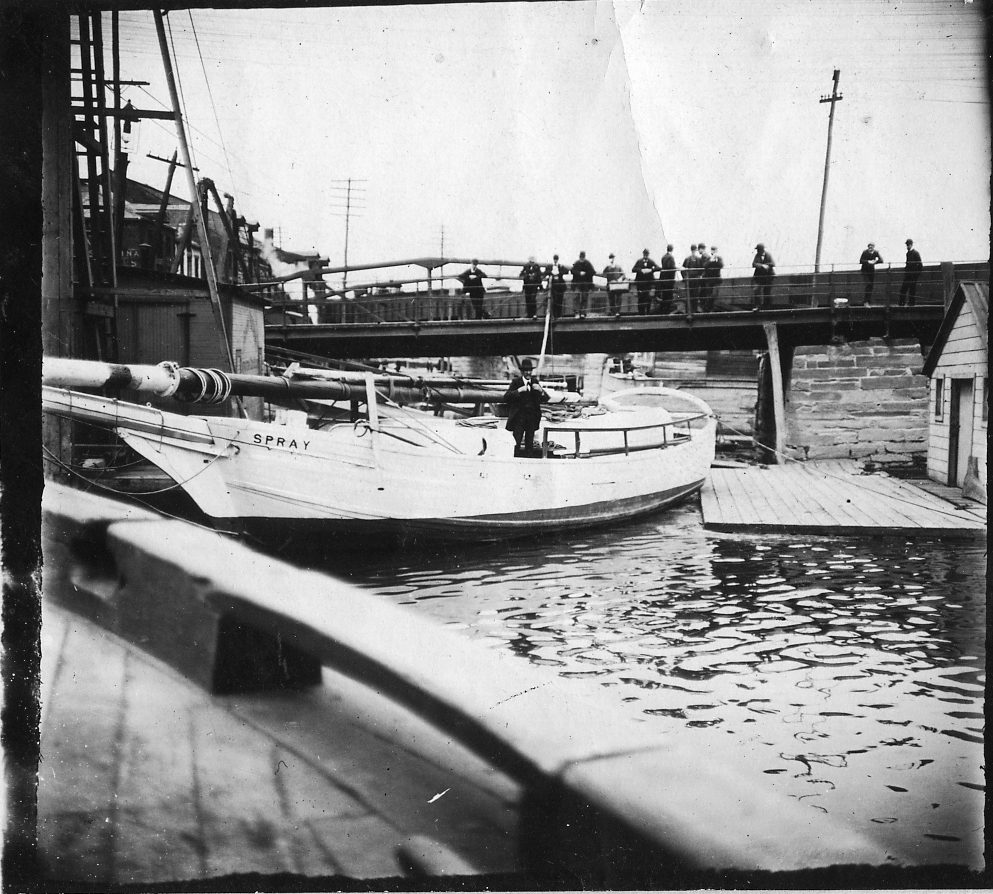
Detta påminde ju mig om att Curette faktiskt hade en romersk IV på livbojen men jag ignorerade detta eftersom det saknade betydelse för mig när jag limmade dit mässingsbokstäverna på skrovet.
Jag påmindes också om att säljaren till mig nämnde att föregående ägare var ett par som bytte från en större båt till en mindre lätthanterligare Fidra.
Detta informationsutbytet har givit oss båda svar, och samtidigt väckt nya frågor till liv, vilka var t ex Curette och Curette II?

Hur som helst,  jag vet nu både namn och yrke på den som namngav Curette.
Och det visar sig att han var både
GYNEKOLOG OCH HUMORIST!

Är inte detta ganska fantastiskt?


Curette's first owner, or, perhaps the second, and probably the person that gave her the name, was either gynecologist or humorist. Since I don't really see the connection between the tool and the boat, I'm leaning towards the latter!
;-)


Can you believe this:
Stefan Andersson from Smögen on the Swedish west coast (previosly owner of Fidra number 1) e-mailed me on one of the first days in 2007, telling me that he had been wondering about the name of his own Curette III, a Fingal number 101. Also a Fisksätra built boat, actually the wharf's first sailboat. This instantly reminded me that my Curette actually had a Roman IV on the life bouy when I got her. But since this wasn't significant for me at the time I ignored it when glueing the brass letters on the hull. It also reminded me that my seller told me that the previous owner was a couple that got the Fidra after a bigger boat because of easier handling and/or maintenance.
This information exchange has given both of us answers, and also produced new questions, who was Curette and Curette II for instance?

However, Now I know both name and profession of the person that gave Curette her name, and it shows that he was both
GYNECOLOGIST AND HUMORIST!

Isn't this rather fantastic?


Curette får behålla sitt namn, inte enbart på grund av min skrockfullhet om namnbyte på en båt, utan för att jag faktiskt tycker det är riktigt vackert. Lyssna!

Curette!


Curette will keep her name, not only because of my superstitious thoughts about changing a boats name, but, I actually thinks it is a beautiful name. Listen!

Curette!

Try it with a French accent! ;-)

Curette!


-----------------------------


-----------------------------


-----------------------------


Bubonic Plague
or
Osmosis
 

Vadå böldpest?


Eller osmos, det har förmodligen alla Fisksätrabåtar, mer eller mindre.

Vad beror det på då?

Kanske förvaringen av glasfiberväven i kalla fuktiga lokaler? Snusgubbar? Polyestern? Tillverkningsprocessen?

 Vem vet, inte du
vem vet. inte jag
vi vet ingenting nu
vi vet inget idag
 :-)

Titta och njut av Lisa Ekdahls
sång lite längre ner på sidan.


A professional explanation of Osmosis in the branch of Physical Chemistry, Cell Biology is as follows:
The tendency of a fluid, usually water, to pass through a semipermeable membrane into a solution where the solvent concentration is higher, thus equalizing the concentrations of materials on either side of the membrane.

 In practice almost all Fisksätra Boat owners will experience this phenomenon as blisters in the gelcoat, below the water line. Probably because of pores in the gelcoat, but not alone, there must probably be a counterpart in the polyester or in the glass fibre. Maybe originating from the storage of the glass fibre or the polyester, maybe in not heated store rooms with high air humidity.
When the blister is scraped off it contains a polyester smelling fluid that needs to dry for several months, because of the capillary forces that will keep the fluid in the glass fibre.
The scraped off blister must then be sealed with a waterproof new gelcoat or a two component paint like epoxy tar.

Nobody is completely sure why this is so common in our boats, we can only recite Lisa Ekdahl in her song "Who Knows"

Who knows, not you
who knows, not me
we know nothing now
we know nothing today

Listen to and enjoy the movies below!

Jag har i alla fall jobbat häcken av mig för många år se´n med renslipning av botten, påläggning av tät grundfärg (en sort som började på Inte och slutade med något otect, vilket även resultatet blev). Parallellt med mitt jobb gjorde tidningen På Kryss samma sak med, just det, en Havsfidra, under mycket bättre förhållanden än jag hade. Ändå misslyckades vi båda!

Den internationala färgtillverkarens försvar löd nästan ordagrant som följer:

Ja men vår färg måste vara bra, vi håller ju på att lansera den på den amerikanska marknaden!

Efter det uttalandet såg jag rött, och gav upp. Mot ren och skär dumhet finns ingen bot! Inte en enda produkt av detta fabrikat kommer över min tröskel mer i detta liv. Detta drabbar sorgligt nog även de av denna fabrikant uppköpta konkurrenternas produkter även om de är bra. Synd, för VC17 var bra! 


Allt detta hände i slutet på åttiotalet eller början på nittiotalet. Jag är inte säker, har ju försökt förtränga eländet. Men värken jag fick i armbågen av det sönderslitna ligamentet när jag försökte återställa efter den misslyckade behandlingen med "den där färgen" blir jag aldrig av med. Jag påminns nästan varje dag av smärtan!


Och det ofattbara som beskrivs i spalten till höger sker faktiskt i November 2006.


I am giving hard critisism against a particular boat bottom paint, where the producer has advertised it as the solution for osmosis boats already 15 years ago, and both me and a Swedish boat magazine tried their solution and failed completely, with a result even worse than before treatment.
This and the fact that they still produce and sell a product that doesn't even function properly above water, as a watertight under water seal (look at my boat cradle where the rust penetrates through the paint from beneath) is what the text above and to the right is about.


Jag blev faktiskt bestört över att se besättningen på Ostindiefararen Götheborg vid ommålningen av botten i Shanghai stå och skrapa sönder vattenfyllda färgblåsor och säga att det är fullt normalt att det blir så.
Ja, för den där "Inte otecka" färgen kanske det är normalt!

Vilken normalt funtad färgtillverkare som helst skulle aldrig lanserat en sådan produkt. Det räcker med att testa den ett år så ser man vad den går för.

 Observera att det ser ut som om de målar om med epoxytjära av samma fabrikant i slutet av filmen.

Varför tror ni? ;-)

Kolla in filmen här
Klicka minst två gånger på startknappen!
på Götheborgs hemsida!


Nu har jag dessutom räknat på det. I teorin håller plasten i 24000 år. Om jag inte gör något mer åt böldpesten blir båten kanske lite sladdrig om 200 år ungefär. Med det perspektivet har jag fått ett visst sinneslugn. 

Nu är det inte så att jag ignorerar problemet helt. Jag tar hand om blåsorna när de kommer, men oroar mig inte längre. Känns bra!

Och jag använder huvudsakligen Hempels produkter. Känns också bra!


I have made a few calculations (not all by myself) and have come to a conclution.

In theory, the glass fibre will last for about 24,000 years.
If I don't do anything at all about the osmosis, the boat will probably get sloppy in the hull, in about, let's say roughly 200 years!
This perspective has given me a certain amount of calmness!

I don't ignore the problem, I take care of the blisters when they appear, but I don't worry, feels good!

I also use Hempel's products chiefly, feels good too!

Lisa Ekdahl


Listen to and watch the movie!

Performance, Music, Song and lyrics
by
Lisa Ekdahl
Her own website


I can't resist posting this goodie too

It Had To Be You!


If you need to download RealPlayer


A literal translation of the song "Vem vet".

Who knows

"Trumpet Introduction"

You are a saga too good to be true
it is a saga of itself that we have found each other
We could as well, ever never met,
or were our encounter already set
even long before we were born

Who knows, not you
who knows, not me
we know nothing now
we know nothing today

Who knows, not you
who knows, not me
we know nothing now
we know nothing today

"Trumpet Solo"


Who knows, not you
who knows, not me
we know nothing now
we know nothing today

Who knows, not you
who knows, not me
we know nothing now
we know nothing today

You are a saga too good to be true
it is a saga of itself that we have found each other
We could as well, ever never met,
or were our encounter already set
even long before we were born

Who knows, not you
who knows, not me
we know nothing now
we know nothing today

Who knows, not you
who knows, not me
we know nothing now
we know nothing today

"Trumpet Closing"


-----------------------------


-----------------------------


-----------------------------


Fidraklubben
 Sorry, in Swedish only!
    

Fisksätravarvets historia
Sorry, in Swedish only!


Sven Yrvind.
In a wonderful Gothenburgish Swenglish!


Nordica Boats Website
In good English, by obvious reasons :-)

Några roliga länkar!

A Few Good Links
 

Good Boats in Russia
Sorry, in Russian only!


My regular supplier (the shop next door)
Byggplast & Båtprylar
Sorry, in Swedish only!
A wide range of products obtainable from most guest harbours in Sweden, often within 24 hours.

Watski
Shops in every guest harbours with pride in Northern Europe!
Swedish, German, Danish, and Norwegian.
Polish will probably come too, soon!


THE Circumnavigator
Evgeny Gvozdev
and his boat
Said.
Mostly in Russian, a few articles and explanations in Spanish and English, but the pictures tells the story!

I have found this article from Voice of Russia ruvr.ru/index.php?lng=eng

Russian yachtsman was found dead near Naples

Russia’s iconic yachtsman Evgeny Gvozdev was found dead on a beach near Naples on Saturday in what specialists say is the aftermath of a severe storm, which occurred in the open sea earlier in the week. Noted globetrotter, Gvozdev left the Russian port of Novorossiysk in September to circumnavigate the globe – his third such voyage in the past few years. 14.12.2008.


January 16, 2010.
The suggestion to include Evgeny Gvozdev in the "Table of solo circumnavigators" has been reviewed and accepted by the Joshua Slocum Society International.


 Boat Register
The register is of coarse incomplete,
but in both Finnish, Swedish and English.

Kleine Goodwin
Sorry, in Dutch only!


Wikipedia
Sorry, in Swedish only!

-----------------------------


Råbandsknop = Reef Knot/Square Knot(US)


-----------------------------

Sailing Terms

Pålstek = Bowline


-----------------------------


Dubbelt Halvslag = Clove Hitch


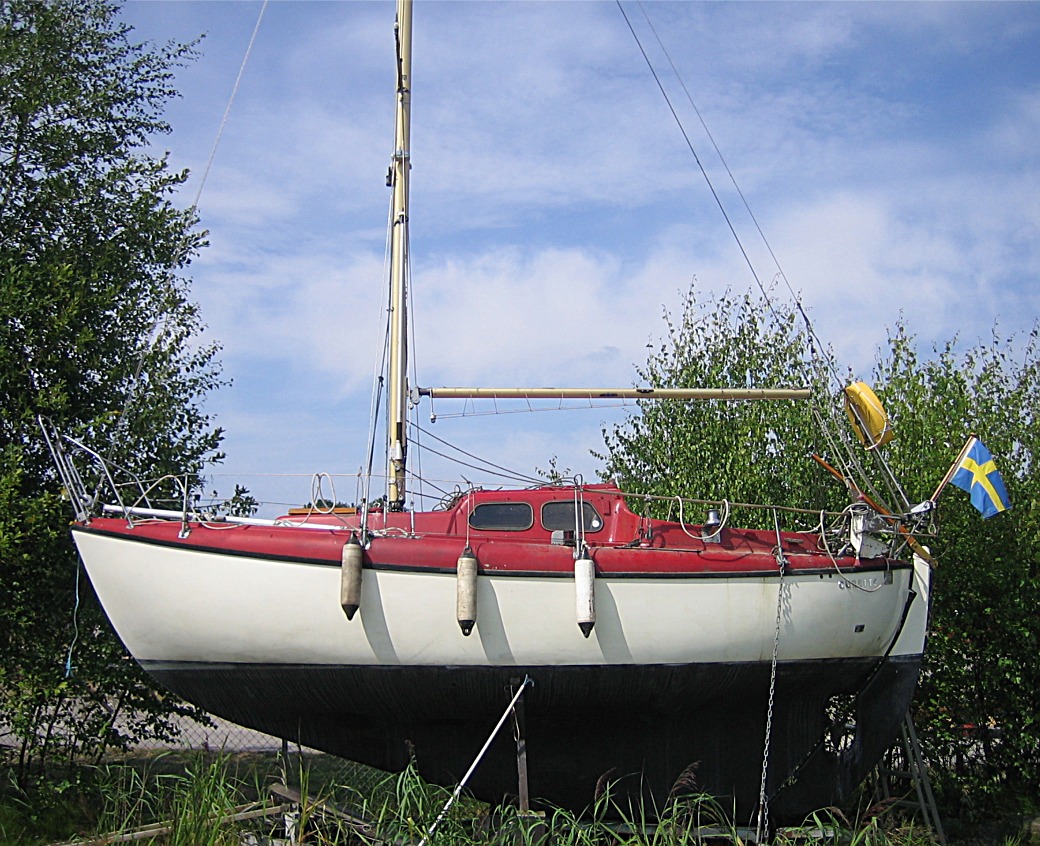
Φ

S 129

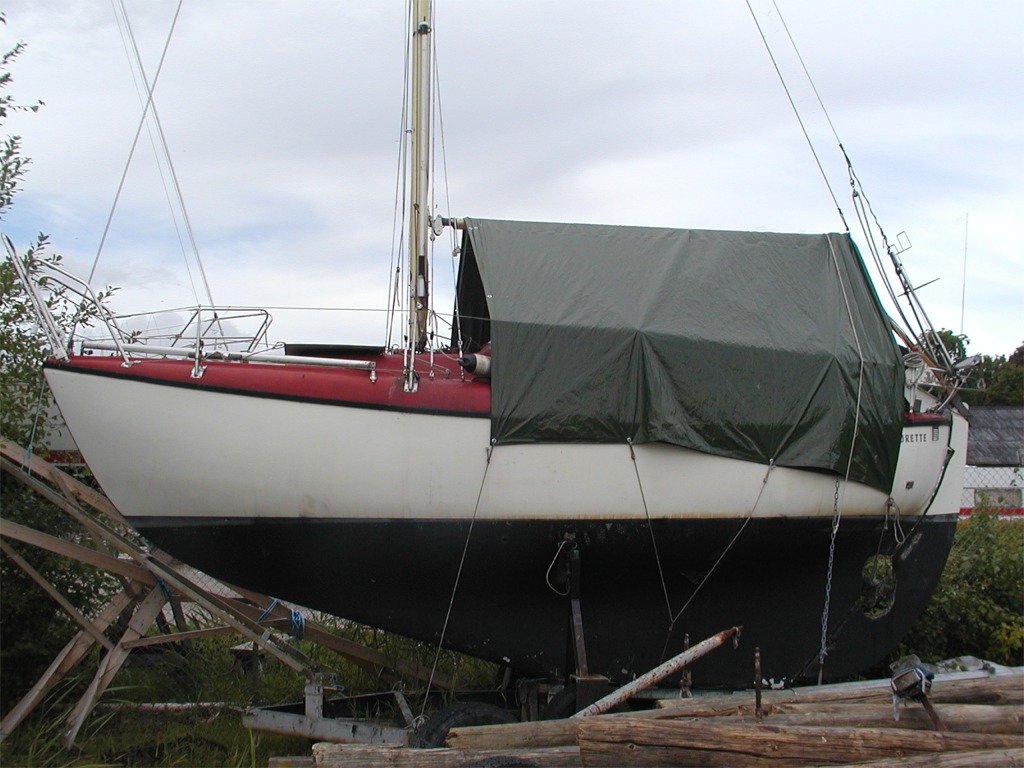
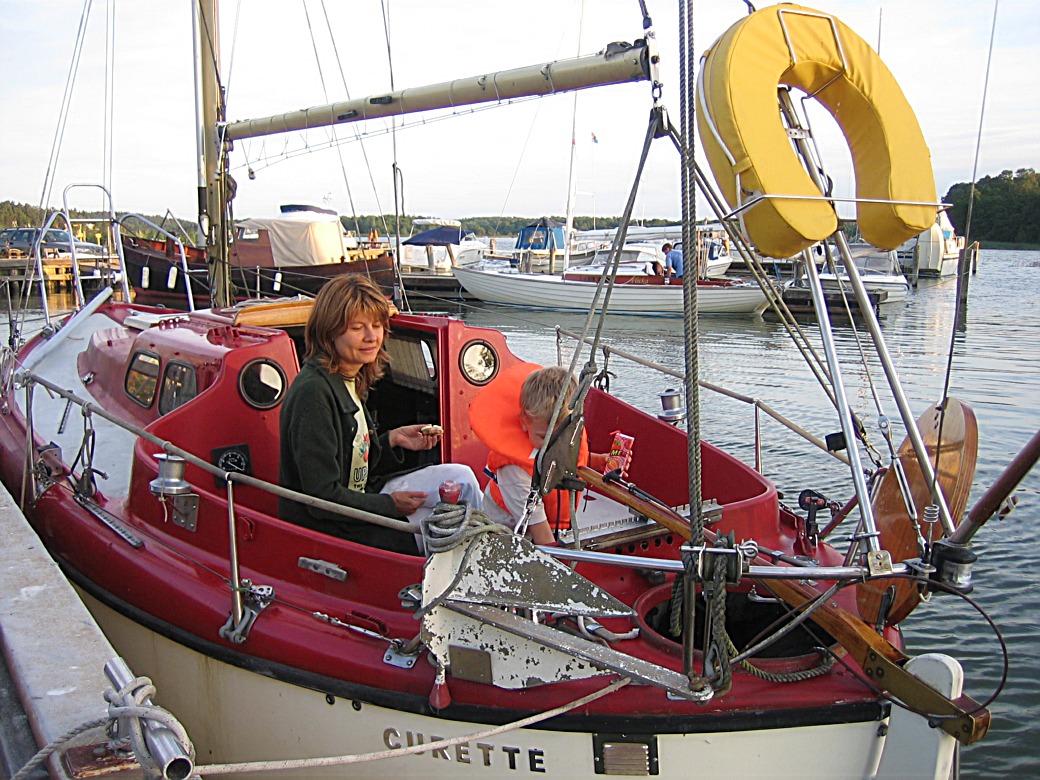
Curette


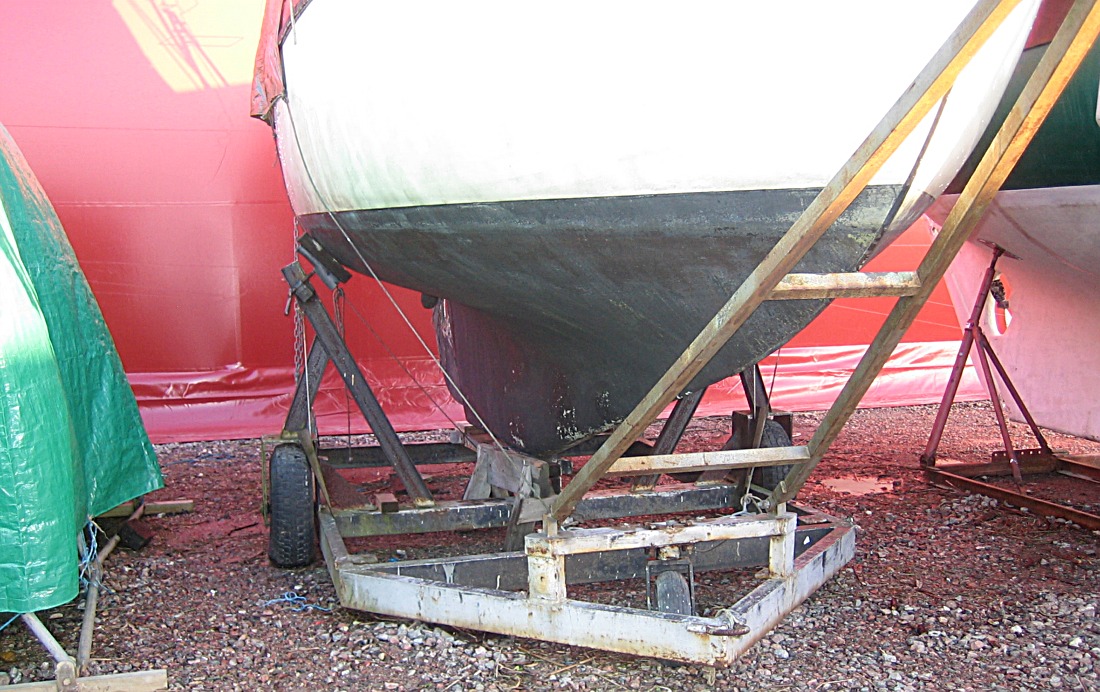
P8236326.JPG (176109 byte) P8236328.JPG (270786 byte) P8236337.JPG (246210 byte)
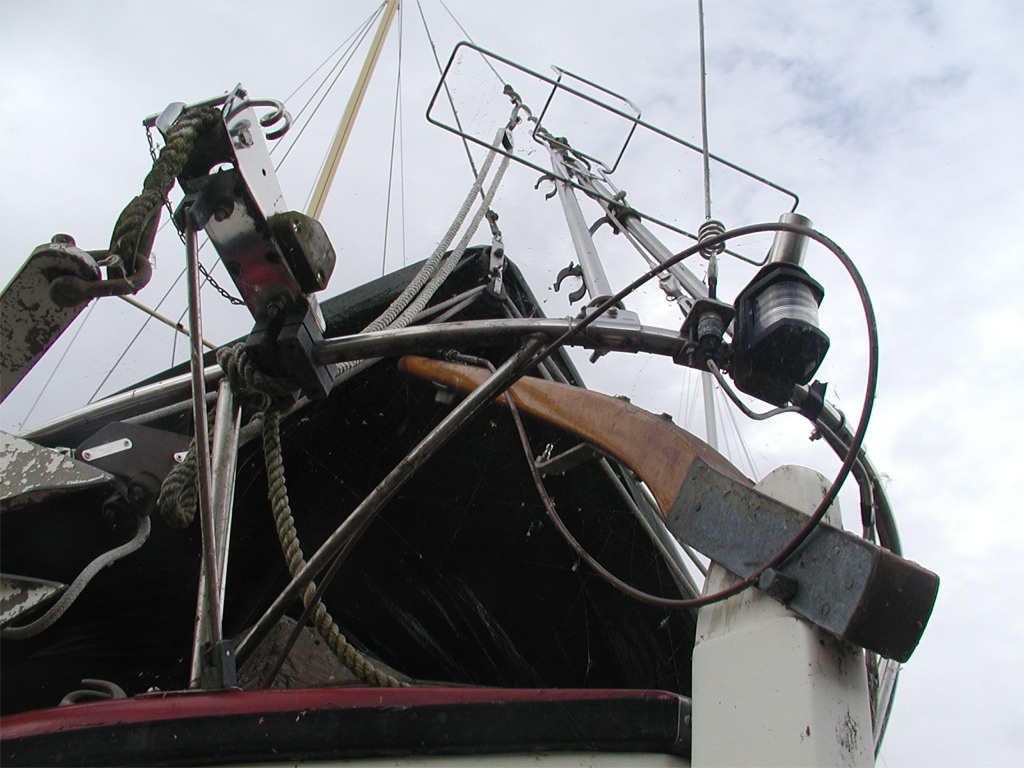
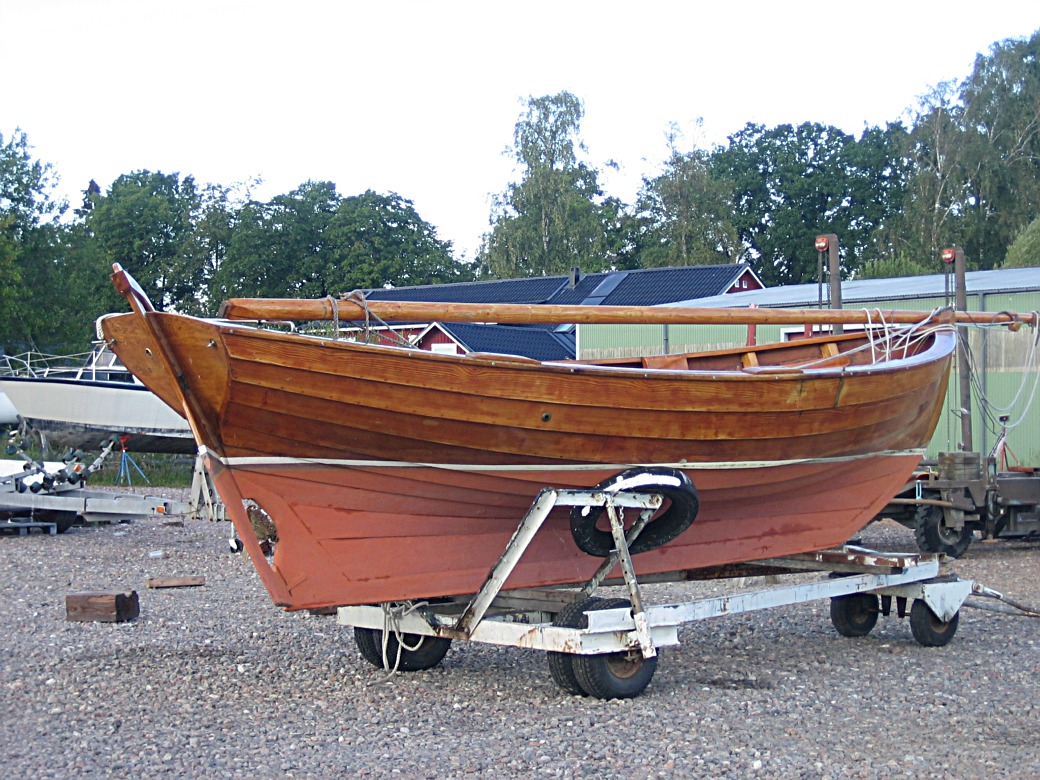
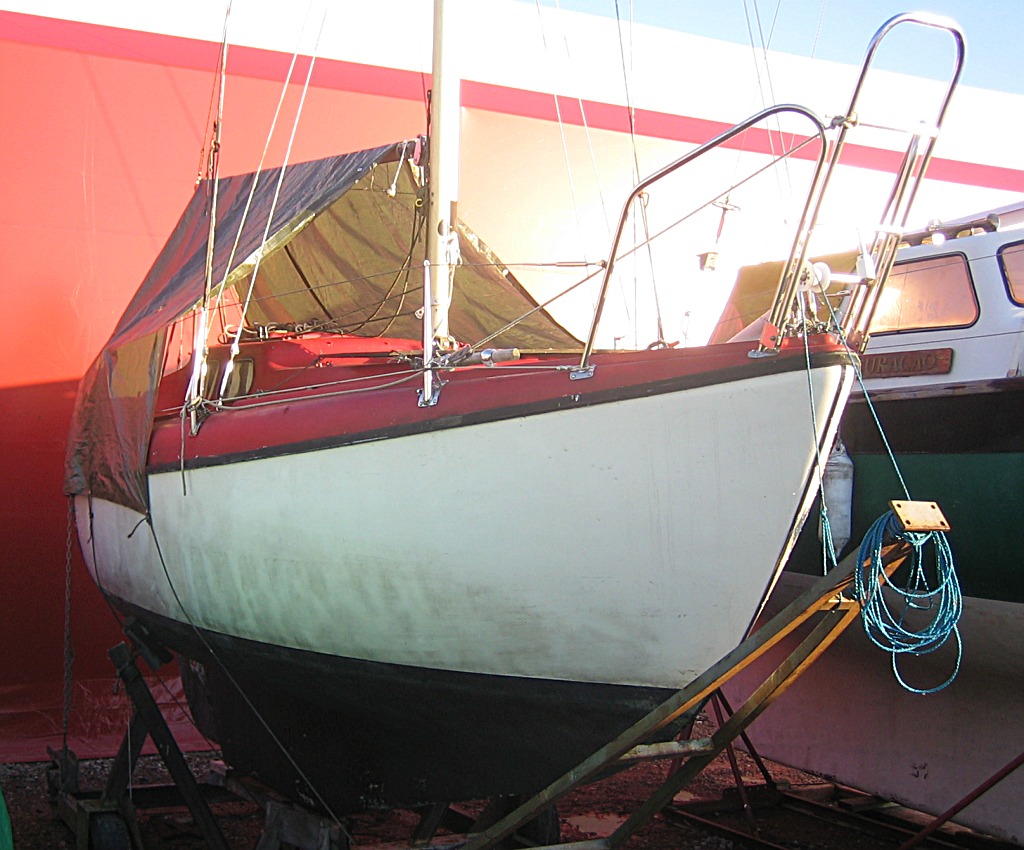
Integrerad fällbar stävstege i rostfritt stål. Dubbla förstag för självslående kryssfock med Peterbom, synlig på fördäck. Skräddarsydd genua på 15 kvadrat med brytpunkt för skotet i pushpit, revbar vid 5 M/sek men måste tas ner helt vid 9. Jobbig vid stagvändning, men bra drag är det. Alla segel hissas och halas från sittbrunnen.

Handmade bow ladder integrated in the pulpit. Double fore stay for jib on Peter boom, and 10 sqm genua or 15 sqm genua where the sheets are drawn back to blocks at the pushpit. This genua has to be reefed at 5 m/sec, and taken down completely before 9 m/sec. Max speed 5.5 knots under half wind, but it gives a poor sight forward to leeward and is difficult to handle when tacking. 
All halyards goes down to the cockpit.


Kedjor med vantskruvar håller båten på plats i vagnen med masten på, nödvändigt under vinterstormar.

The boat is chained to the cradle. A necessity with the mast still standing during winter storms.

Båtvagnen har utbytbar draganordning för traktor eller personbil med kula. Vagnen har två fasta hjul, och tre svirvlande vilket gör det möjligt att vända den runt sin egen axel.

The cradle has two main wheels and three swiveled which makes it able to turn around its own axis. Exchangeable pulling device for either tractor or car.

P8236339.JPG (180861 byte) P8236332.JPG (134629 byte) P8236334.JPG (103037 byte)
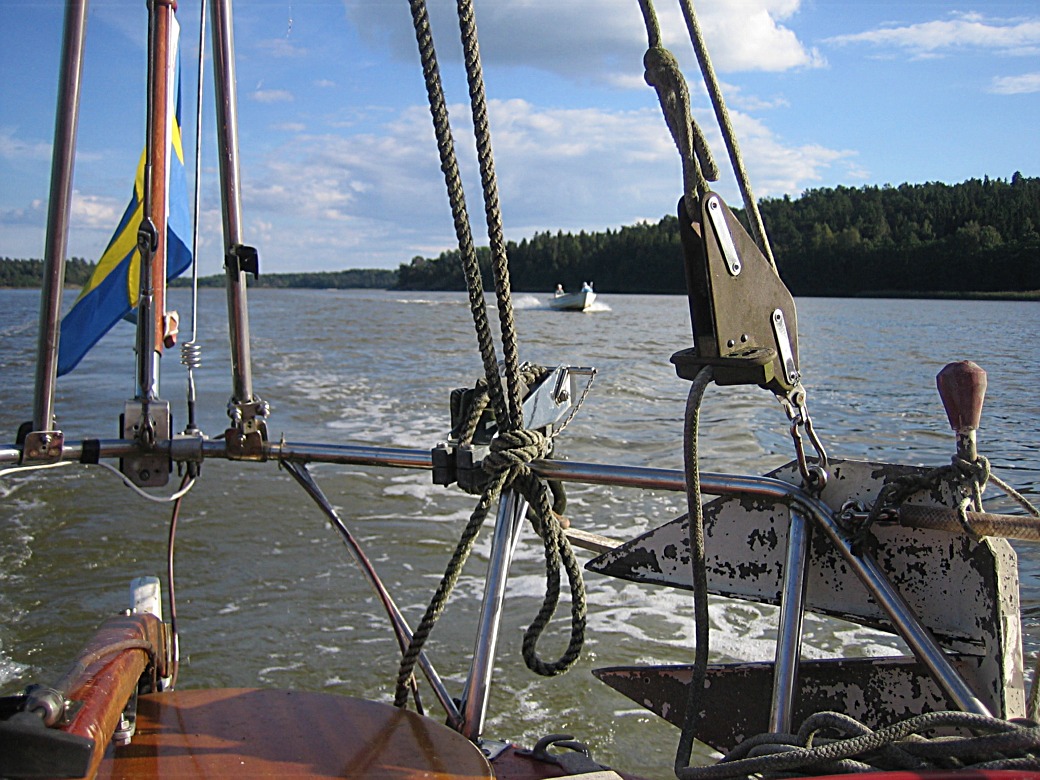
Ankarrulle med jollebeslag. Ankarlinan bryts med block högt upp på akterstaget. Underlättar betydligt vid lättning av 110m ankarlina som sedan faller kinkfritt ner genom akterluckan. Ankaret vilar i egen hållare utanför pushpit. Rostfria rör längs akterstaget med fäste för livbojshållaren. Fungerar också som stadigt handräcke vid äntring via badstegen. Gasreglage på rorkulten.


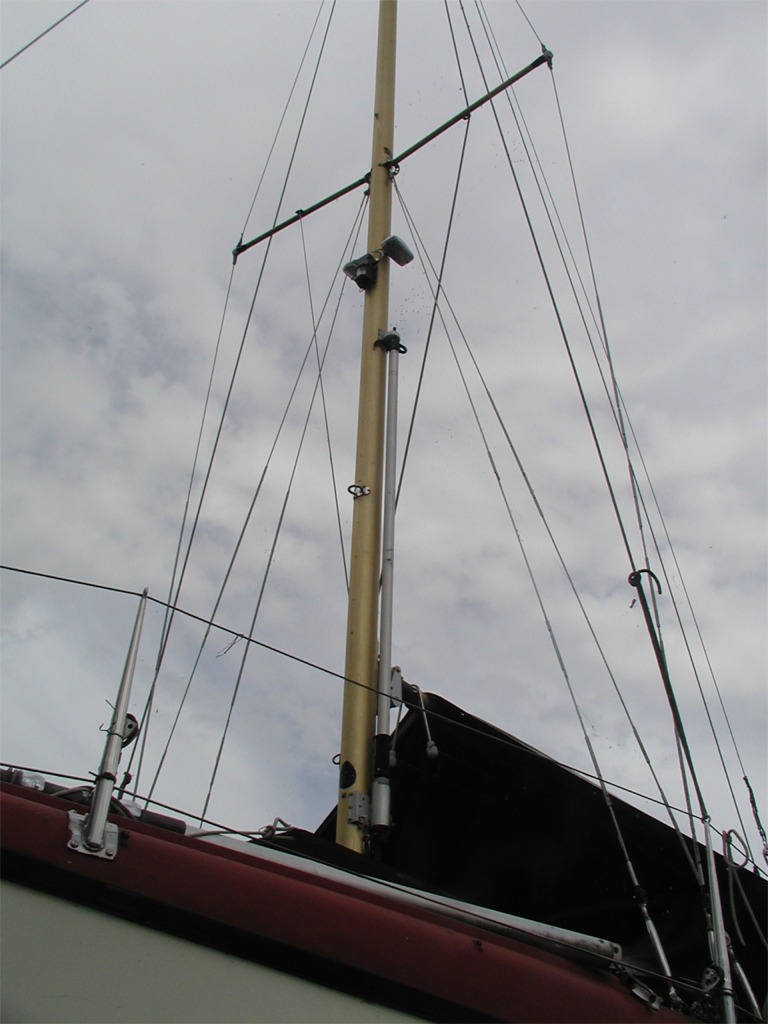
Däcksbelysning under spridarna. Teleskopisk genuabom/båtshake i låsbar hållare på masten.

Deck lights and a telescopic boom or boat hook, Extendable to 4 meters.

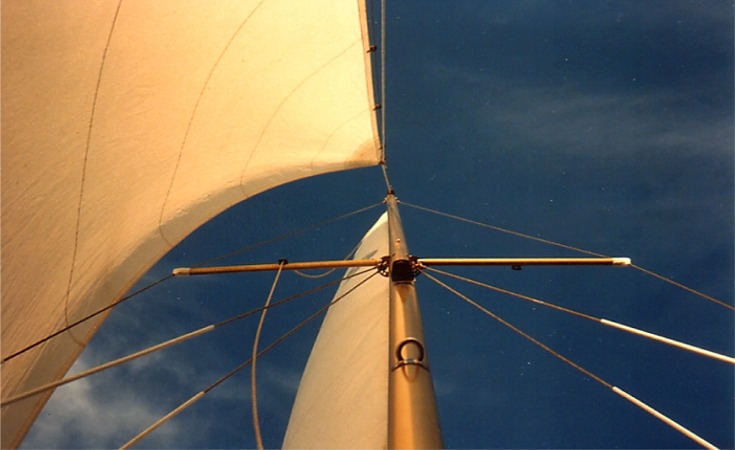
Masttoppsbeslaget förstärkt och modifierat för dubbla förstag. Samtliga linhjul i masten nytillverkade i delrin.

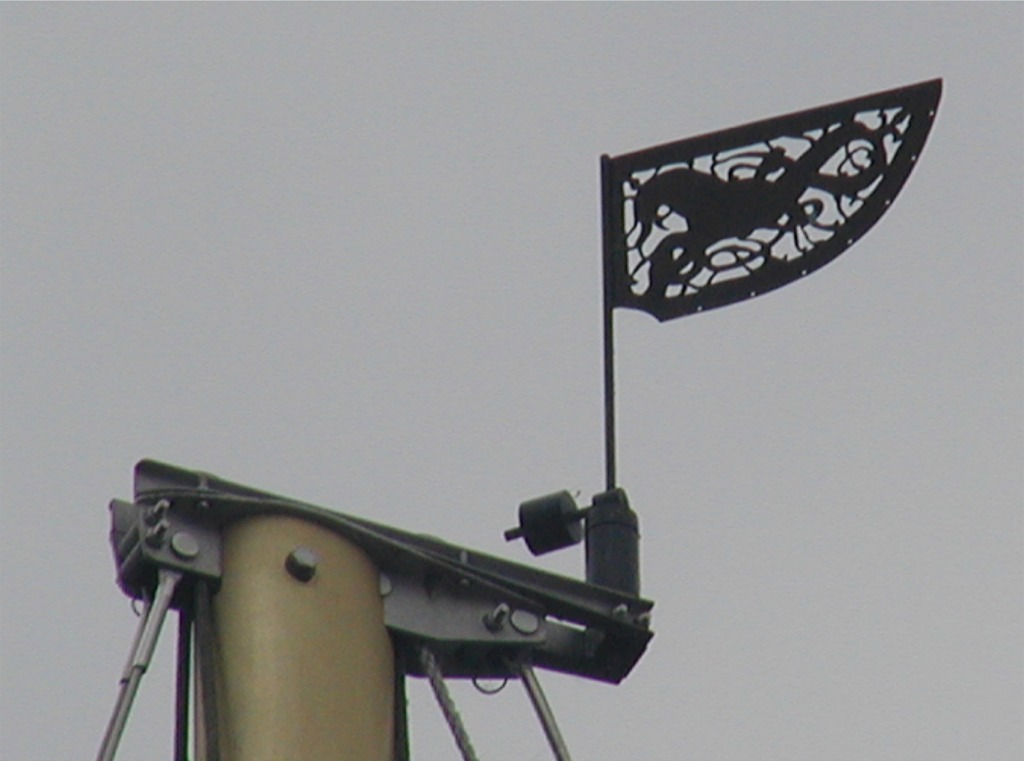
Vikingaflöjeln i koppar och mässing med drakmönster är utsågad för hand, lagrad med dubbla rostfria kullager och balanserad med en motvikt. Fungerar inte bara perfekt efter tjugo år utan har ett stort personligt affektionsvärde för mig.


The anchor line goes through a roller bracket up to a block high on the aft stay. It's much easier for a persons back (mine for instance) to stand in a straight up position and pull a line down with his own weight than the opposite. Furthermore, three hundred and thirty feet anchor line will fall down the hatch under deck without twisting! P8236338cr.JPG (1056268 byte)

En sötvattenskyld Albin O21 driver en 16 tums trebladig propeller. Henrik underkänner just anoden som måste bytas.

Jadå, den är bytt!

A sweet water cooled Albin O21 with a 16 inch three bladed propeller.
The anode was not approved by Henrik.
Now it is replaced.


Mast head rebuilt for double stays.
All line wheels are new in delrin.

The Viking style weather vane in copper and brass is crafted by hand and has double stainless roller bearings and is perfectly balanced with a counterweight. Has worked fine all year round for more than 20 years now.
My Dad spent many winter evenings sawing out the dragon pattern many years ago!

For those of you that wonder, I do take tele photos of the chritical parts in the mast head every year, to ensure myself everything is allright, since I have quit taking the mast down, and built a steel support under deck instead.
It's less harm done to the mast and stays this way. The only negative is the difficulty to wax the mast. It's impossible!
 :-)

P5110558.JPG (253068 byte) P5110562.JPG (237122 byte) P5110560.JPG (252063 byte)
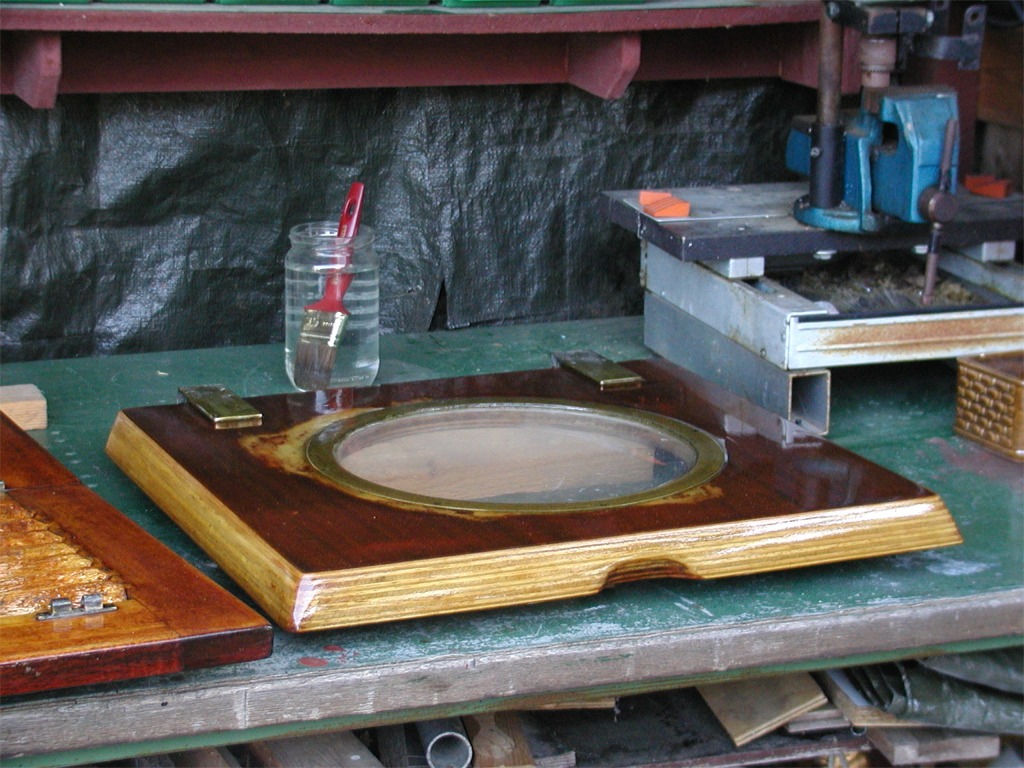
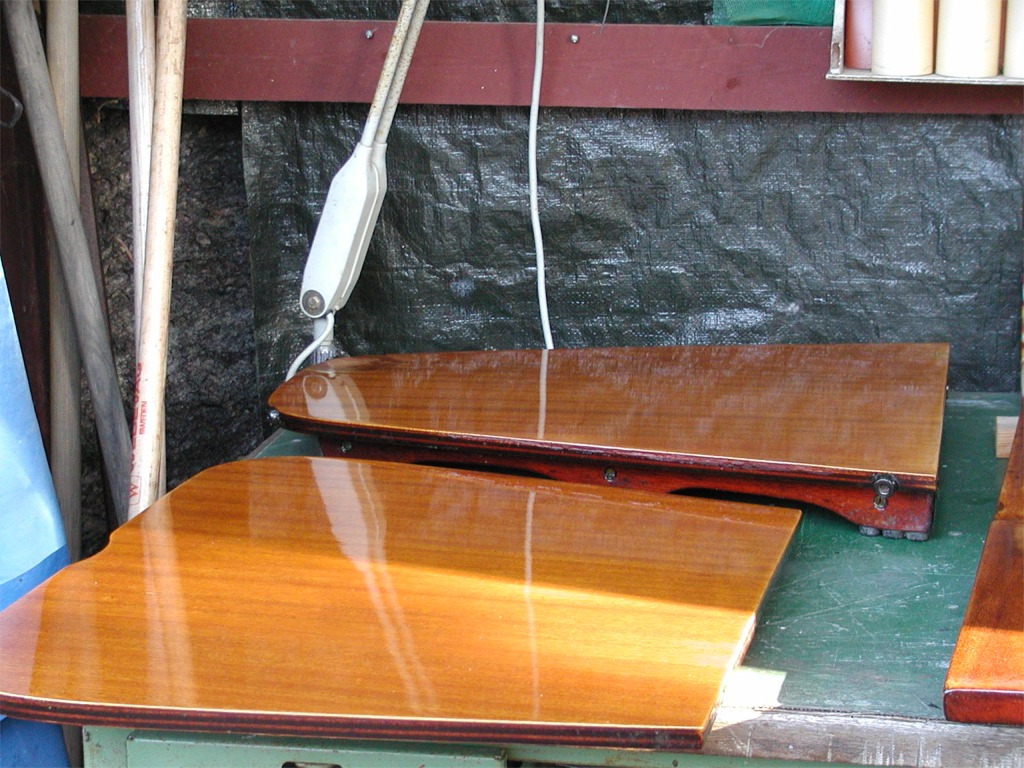
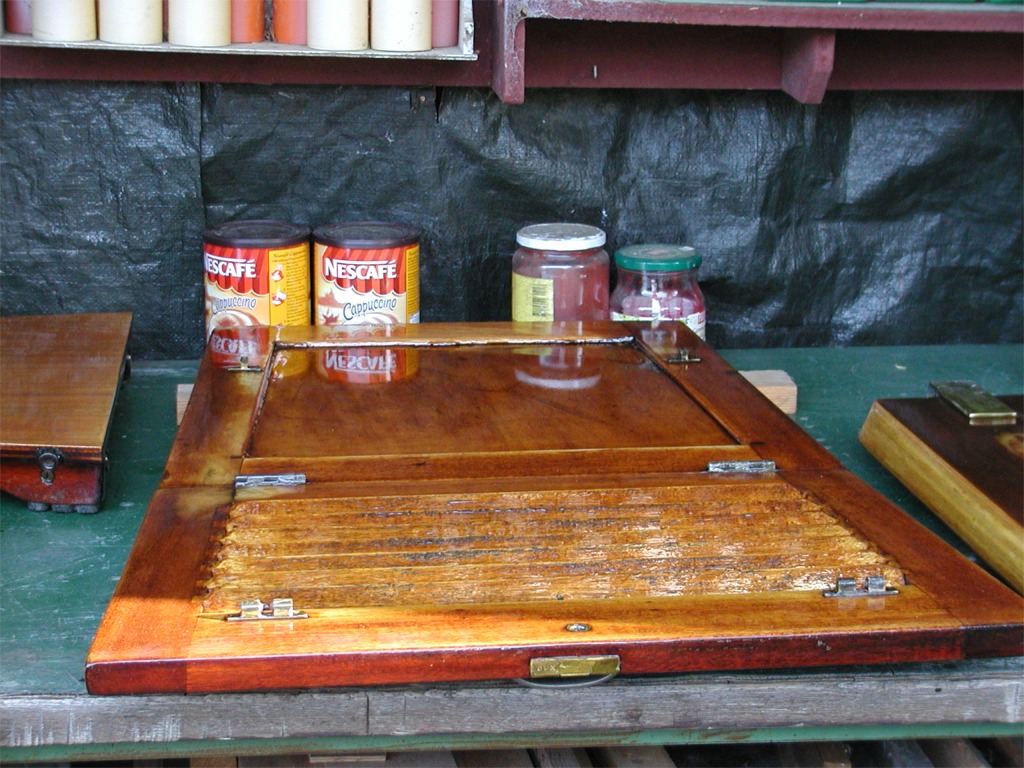
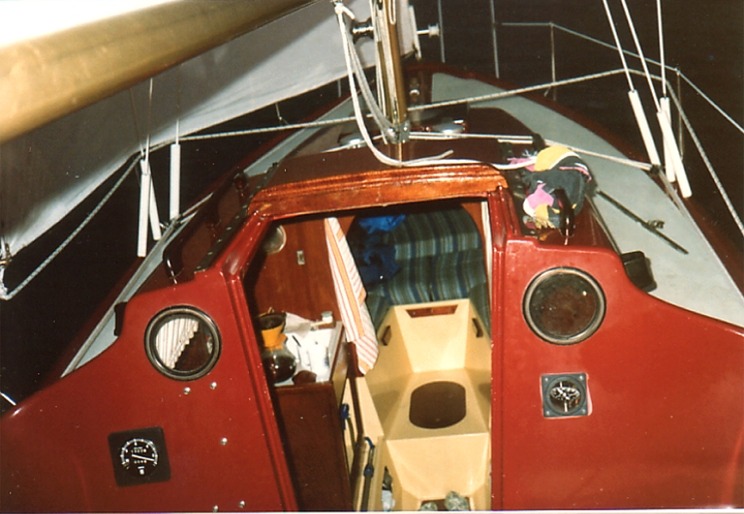
Anledningen till att luckor och durkar är av trä är att förluckan sprack, och akterluckan föll överbord mellan Viksten och Måsknuv, öster om Järflotta. Vi såg den sakta singla som ett löv genom det klara vattnet, utan att kunna göra något, till sin slutliga viloplats 54 meter ner. Detta hände samtidigt som jag själv kände att sittbrunnsdurkarna gjort sitt. Så det var bara att ge sig ut och jaga virke! Poängteras kan, att min egen brillianta idé om ett gångjärn påminnande om en kardanknut, fått luckan att stanna kvar ombord i mer än tjugo år nu!


Utseendemässigt tycker jag det var en förbättring med träluckorna. Det är dock rätt mycket merjobb på våren, att behöva ägna så mycket tid åt sju trädetaljer, till en båt som för övrigt är byggd helt i glasfiber, men det måste ske varje vår. Det synliga spåren efter en (1) utebliven vårrustning kommer aldrig att försvinna, vatteninträngningen precis utanför mässingsramen runt fönstret, suck!

Däcksluckorna och sittbrunnsdurkarna är tillverkade av marinplywood, klädda med Afrikansk mahognyfanér. Aktra durkens undersida förstyvad med massiv teak, och gummifötter håller den på plats i alla riktningar. Främre durken fungerar också som någorlunda vattentät motorrumslucka. Fönstret i förluckan är 12mm tjockt och tål att gå på.


P5110561.JPG (253785 byte)
Ruffluckan i massiv mahogny med jalusi. Myggnät på insidan. Kräver sin man vid vårrustningen.


HavsfidraInterior (1).JPG (313489 byte)

Behind the back of the sofa is a high-pressure kerosene kitchen attached. Balanced for use even in rough weather at sea.


HavsfidraInterior (0).JPG (261015 byte)

The steel support is to prevent the roof from being compressed by the mast weight.
The last time the mast was taken down was in 1988, I think.


HavsfidraInterior (4).JPG (419449 byte)

The curtain also works to cover the doorway to the front cabin.


HavsfidraInterior (2).JPG (277777 byte)

With closed doors the kitchen china will stay put, even if not in complete silence.


HavsfidraInterior (3).JPG (315174 byte)

The closet...


HavsfidraInterior (5).JPG (417399 byte)

...is nowadays occupied by a cooling box. :-)


HavsfidraInterior (11).JPG (276258 byte)

On starboard below cockpit.
Except from wardrobe there is space for the gasoline tank with filters and the bilge pump, and the main switch.


HavsfidraInterior (6).JPG (139540 byte)

The whole glory in one view!


HavsfidraInterior (9).JPG (271859 byte)

On port below cockpit.
Please ignore the bucket. This is also used as wardrobe and for spare ropes.
The heater is seen in the backround, as well as parts for the sweetwater cooling system.


HavsfidraInterior (8).JPG (296511 byte)

This is a view I will only show you once!
Do never go back here again!

It's behind the instrument panel.
To the left is the expansion vessel for the sweetwater cooling system.
In the lower centre is a three-way valve run backwards, to make it possible to shut off the cooling water for the exhaust system shortly before shut down of engine.
To the right is a part of the bilge water pump visable.

My only defence when it comes to the electric connections is that every cable is soldered or screwed thouroghly by myself. It has worked without problems since I think 1984, and will continue to do so if I only can keep meddlesome people away even in the future!


HavsfidraInterior (7).JPG (291679 byte)

I replaced the start key with a pulling switch and a push buttom many years ago, of safety reasons.
A friend of mine wounded his knee, and broke off the key. It was not especially fun!

It's also very easy to instruct passengers that if the skipper happens to leave the boat, even if he reluctantly do this, especially if there is some coffee left, it's just to push on every button, even under sail, because even the autopilot will eventually sease to keep the boat on coarse, and make it come to a halt.
:-)


HavsfidraInterior (10).JPG (442182 byte)

I'm not very happy with the heater. It needs cleaning, but is so terrible to pick apart, that I don't have the strength to do it any longer.

If I only had known better, I would never have bought and installed this heater!

Just to clean the burner, and it seems to be necessary every, or every second year, one has to disconnect and take the whole unit down, Screw the bottom off, and then divide the unit in two halves. One has to lift the right half off, otherwise the interior will fall out in small parts. All this has to be done just to change the wick.

In a good construction this should have been done from below, without tools!

I'm lucky to still have my old HeatPal!


-----------------------------


-----------------------------


-----------------------------


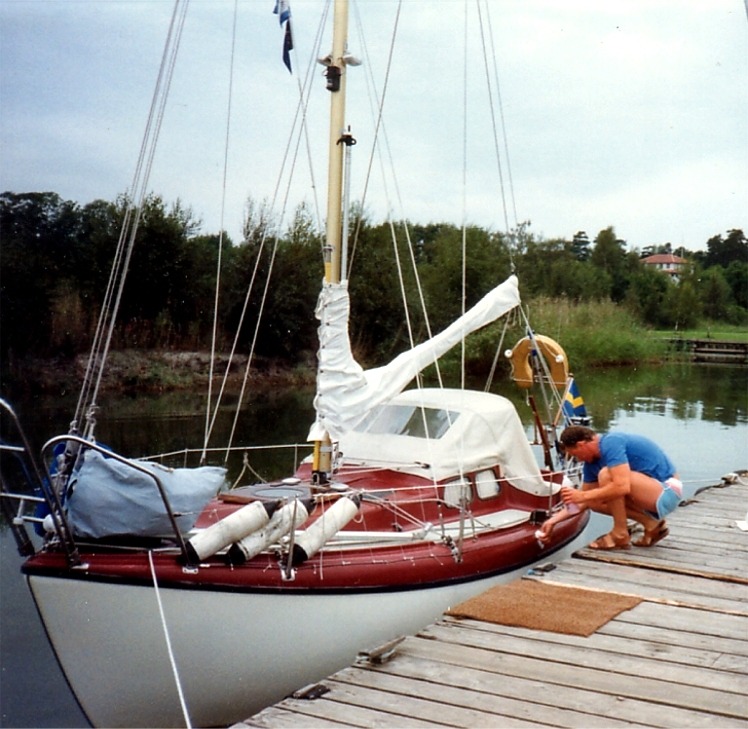
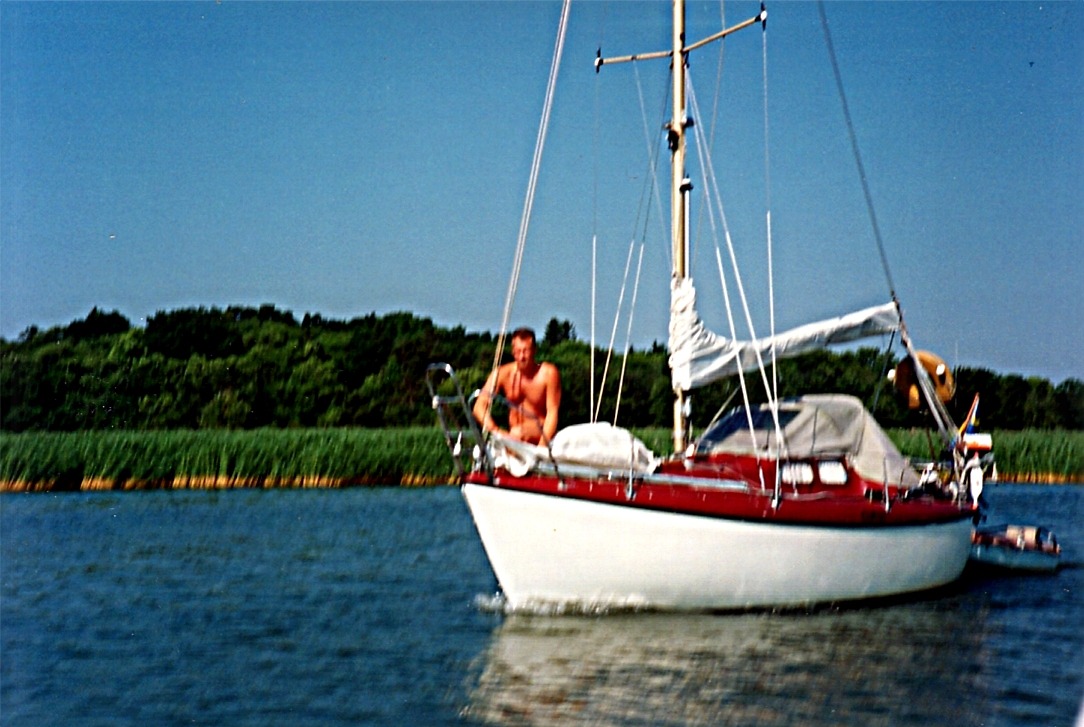
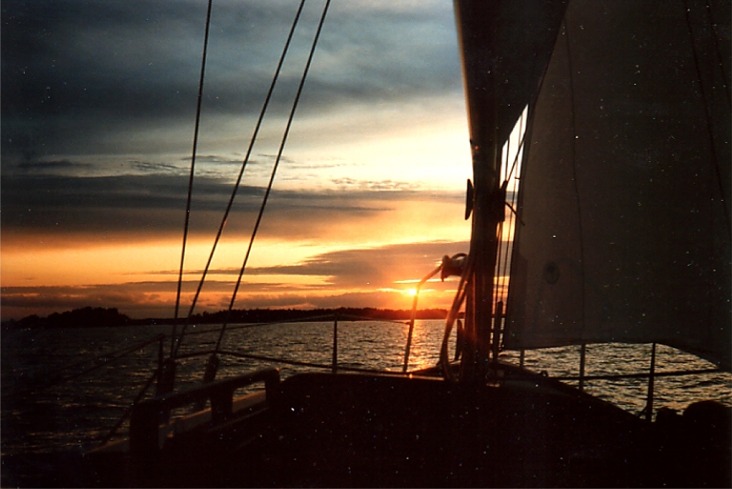
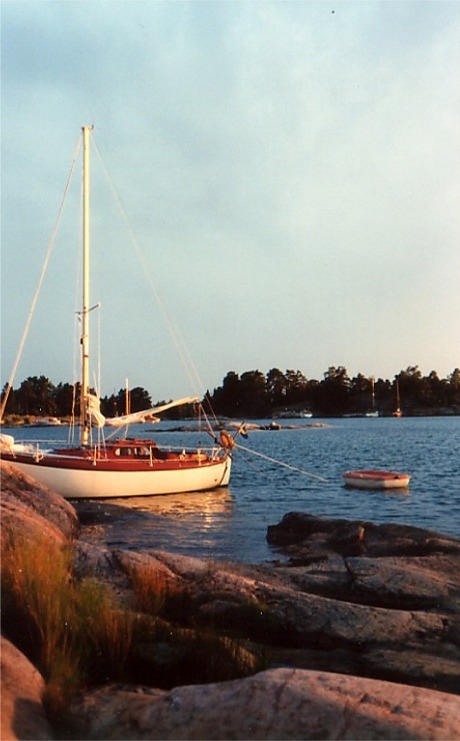
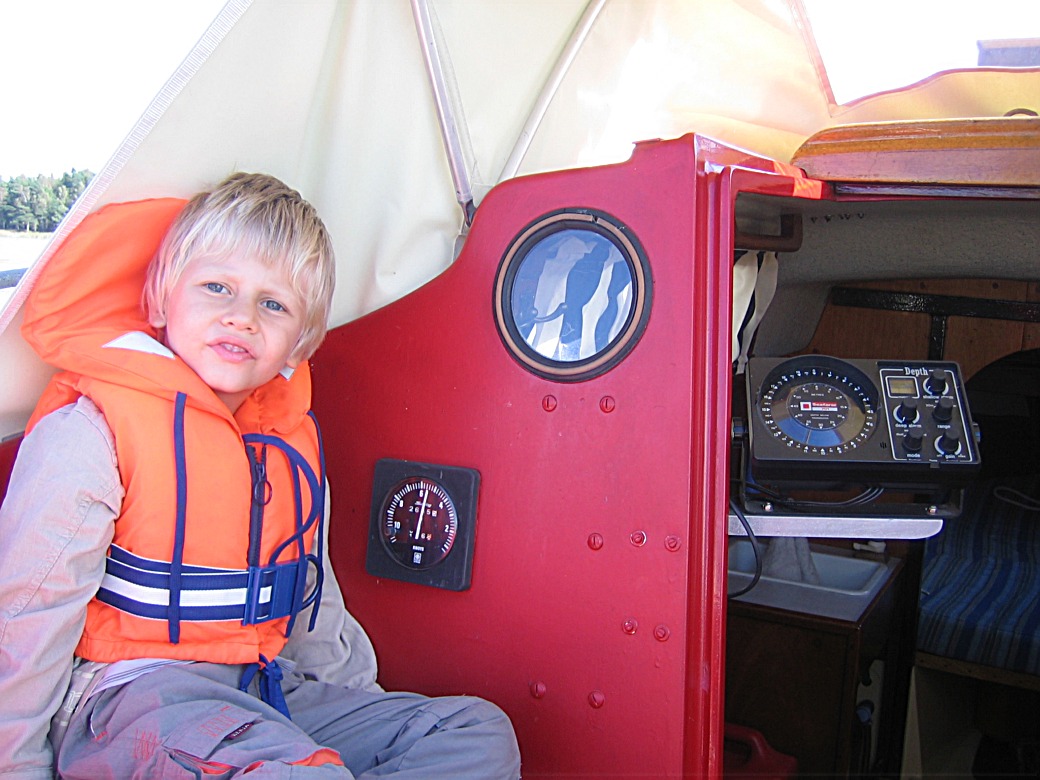
Det är märkligt så få gamla sommarbilder det finns av den egna båten.
It's strange so few pictures that actually are taken of the boat through the years.


Havsfidra_7a.jpg (153832 byte) Havsfidra_7b.jpg (203302 byte) Havsfidra 8c.jpg (66172 byte)
Klart för avfärd!
Ready to go!


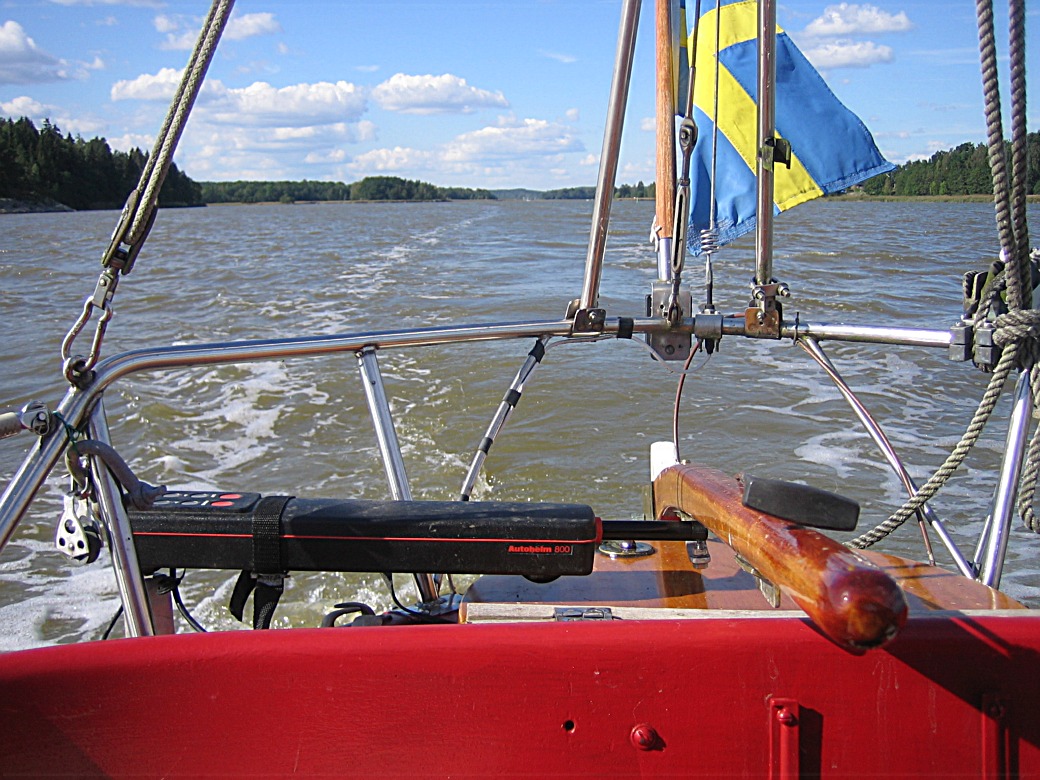
När Autopiloten gör jobbet.
When Autohelm does the job.


Under segel.
Under sail.


Havsfidra 9a.jpg (104796 byte)

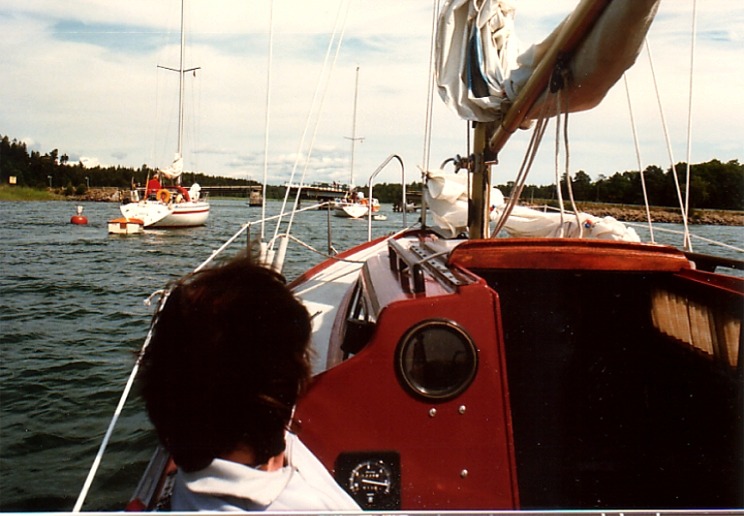
Broöppning.
Swing bridge at Tottnäs.

Curette 1985cr.jpg (330262 byte) Havsfidra 10b.jpg (104640 byte)

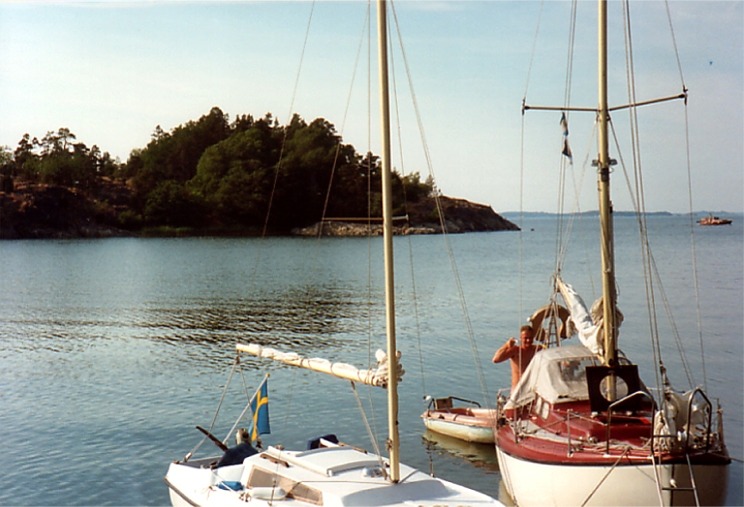
Fifång.
The island Fifång.

The secret favourite island.
One of the 24,000 to choose from!


Havsfidra 8a.jpg (75603 byte) Havsfidra 8b.jpg (78613 byte) Havsfidra 9b.jpg (104109 byte)
Målet hägrar.


Nattfika.
Night coffee.


Havsfidra 9c.jpg (76143 byte)  


Havsfidra 10c.jpg (91225 byte)
Västra Stendörren.
Western Stone Door.